Highlights
Best moments
- The first proper red dirt driving day, with Roger feeling steady and the suspension doing its job.
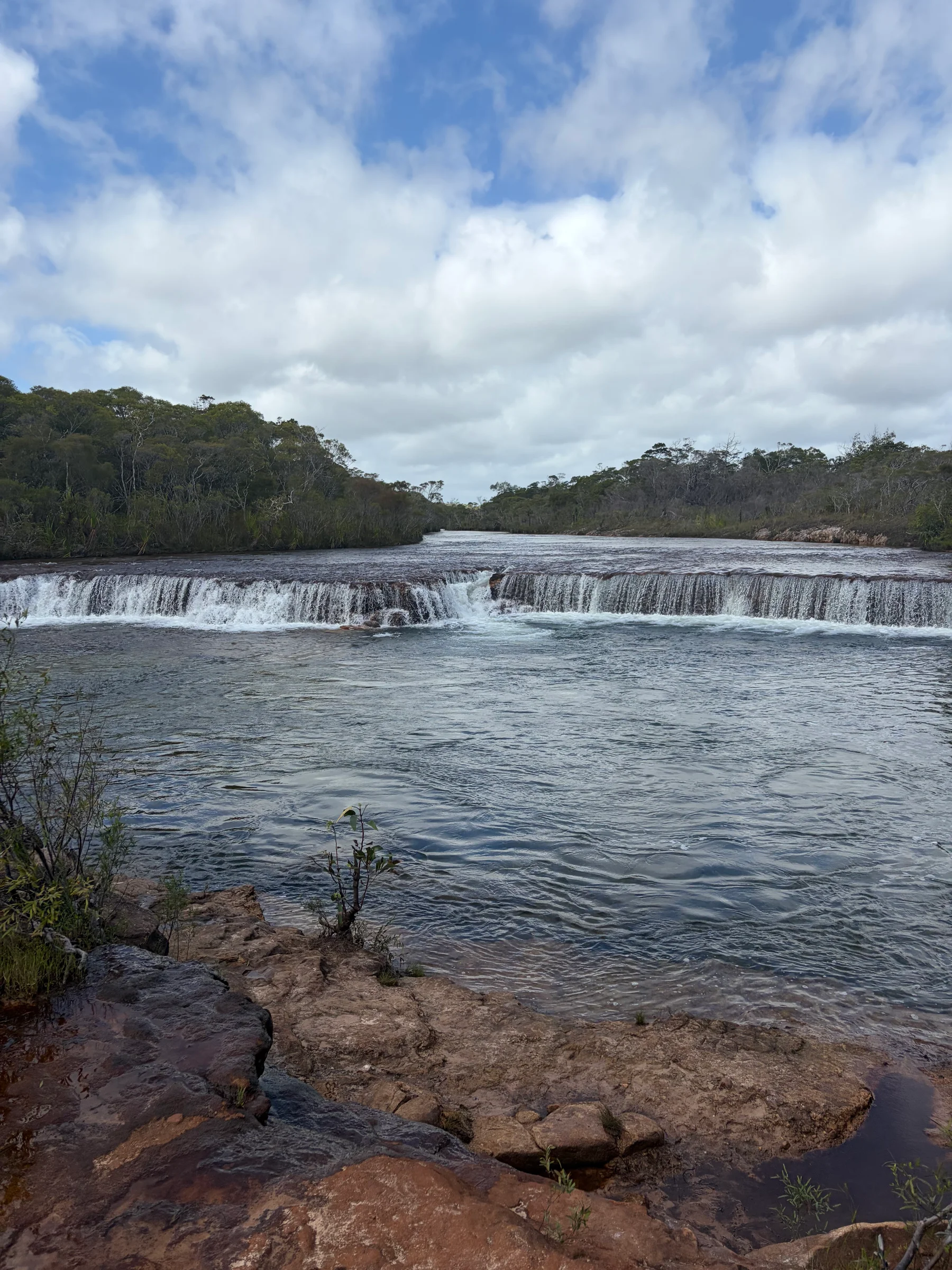
- The swim at Fruit Bat Falls, with clear water and almost nobody there.
- Finally getting into Elliot Falls after the washouts and needing a moment to calm down.
Failures
- Having one of the spider-heaviest showers of the trip at the station stop.
- Thinking for a moment that Elliot Falls had no mosquitoes, then being corrected very quickly.
- Watching 2026 Old Telegraph Track opening footage and realising very clearly that Roger was not going through Nolans-style crossings.
Notes from the road
- Tyre pressure advice is useful, but in the end we mostly had to go by feel.
- The drive itself became the main activity, not just the connection between places.
- The handheld radios were suddenly not optional extras anymore.
- Being the only campers is excellent and slightly unsettling at the same time.
Leaving Cooktown felt like leaving the last normal stop before the red dirt.
We had shops, a protected caravan park site, coffee, a lookout, a quiet RSL and a day without much pressure. North of there, the trip changed. Not immediately into dramatic wilderness, but enough that the driving itself started to become the main subject.
Until then, driving had mostly been a way to get somewhere. Sometimes long, sometimes beautiful, sometimes boring, but still mainly the connection between campsites. On Cape York it became different. The road condition, tyre pressure, dips, washouts, fuel, weather and distance all mattered more. You do not just arrive. You manage the road.
That was the shift in this chapter.
Leaving Cooktown
Tuesday morning started with a run, then rain.
We had a coffee in Cooktown before leaving. The cafe was surprisingly good, and because it was wet outside we were not in a rush. The plan was to start heading towards Australia’s most northern point, but the first day was not meant to be difficult. From what we knew, it would be a paved drive to the station stop, around two and a half hours.
That was exactly right for easing into it.
We were still not fully sure what to expect from the road conditions further north. We had read a lot and heard different opinions, which is normal for Cape York. One person says the road is easy, another says it is terrible, and both can be true depending on the vehicle, rain, recent grading and how fast they drive.
The first day was straightforward.
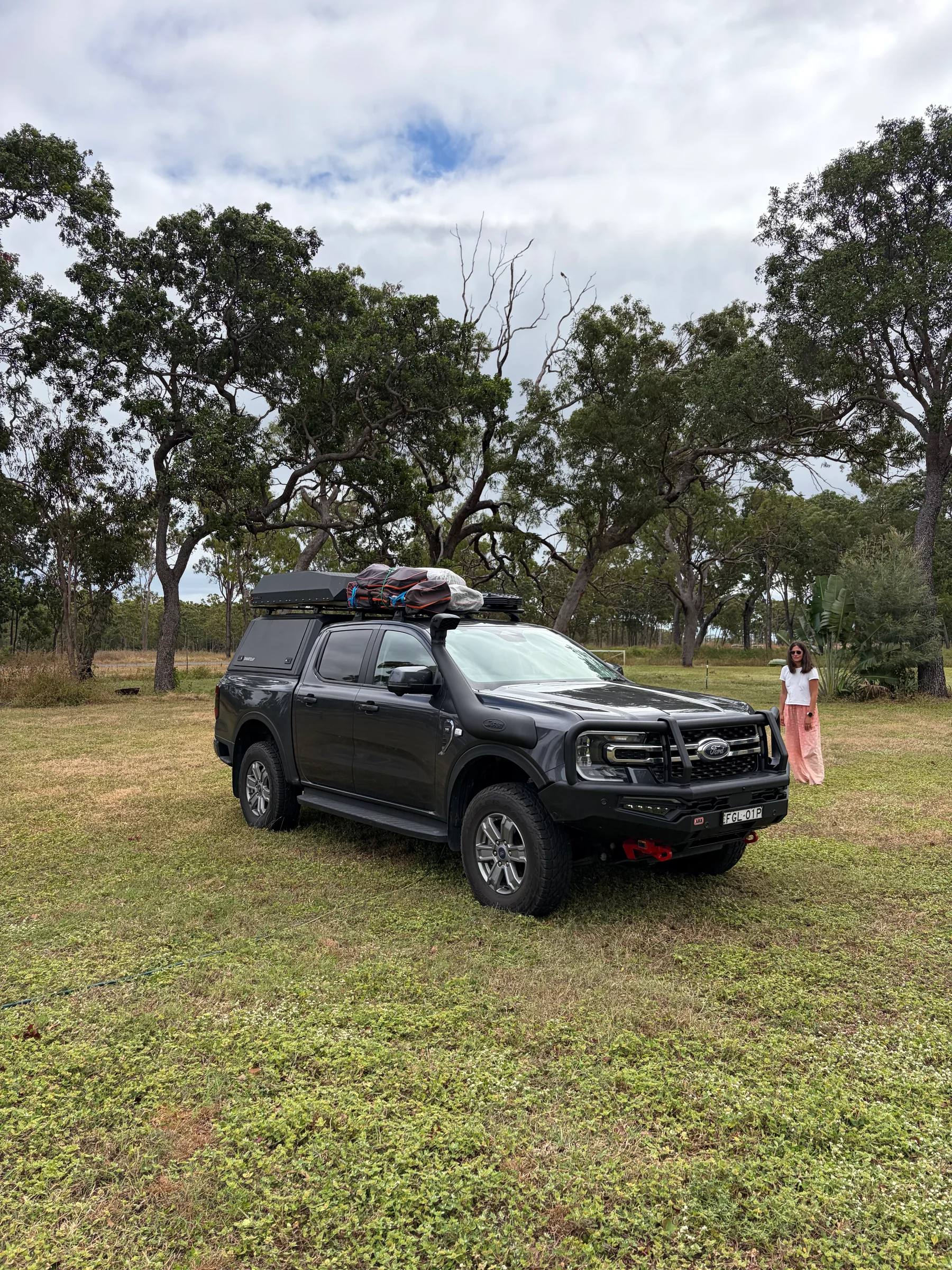
We stayed at Fairview Station, or Lakeview Station as I had written it in the notes and kept telling people. Either way, it was a station stop beside the road, and it gave us a very quiet afternoon before the dirt started properly. The weather was better there than in Cooktown, and because we arrived early I had time to continue working on the journal blog website.
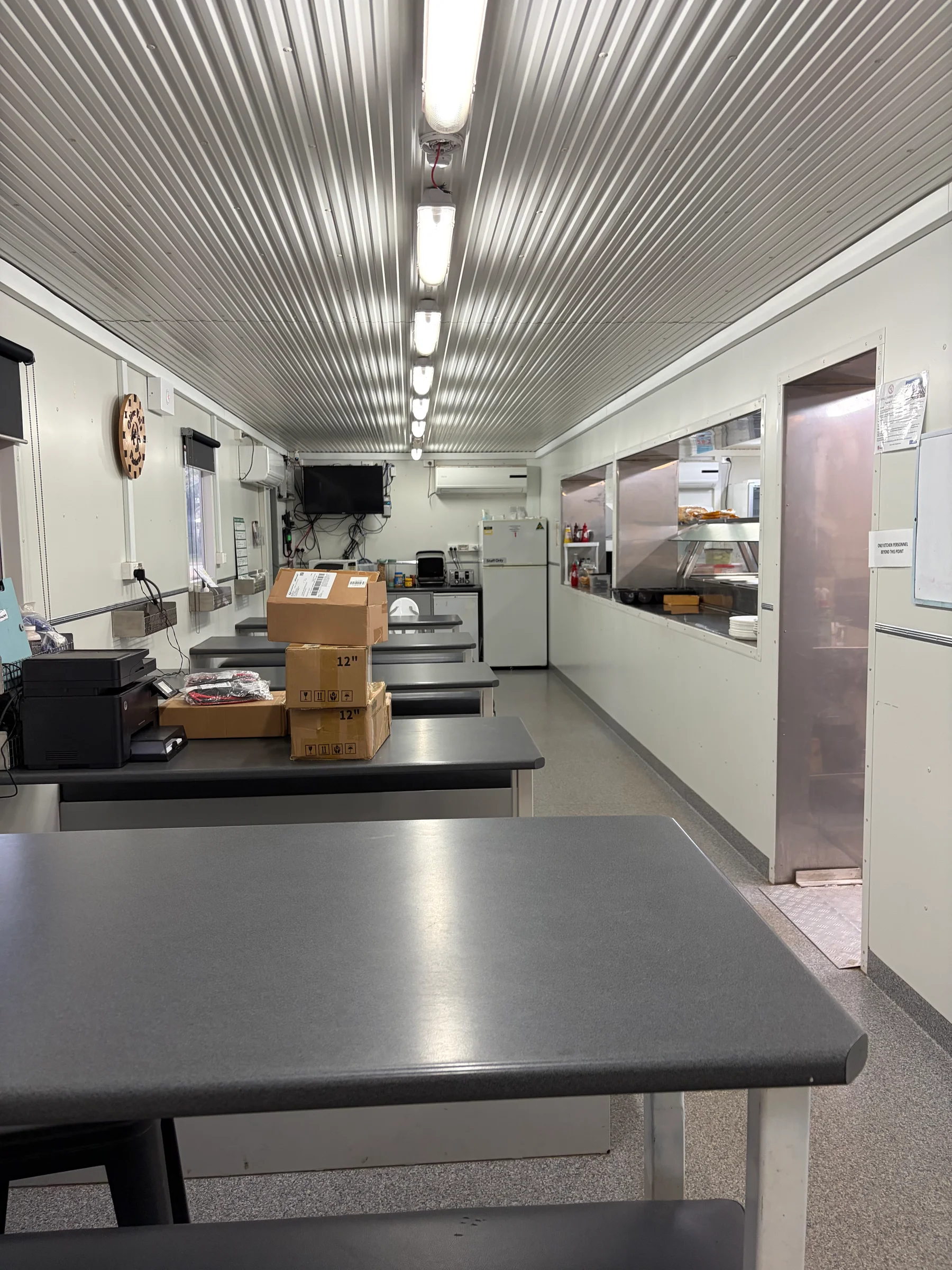
We signed up for the evening buffet dinner. It was not very yummy, but it did the job.
The roads and campsites were still surprisingly quiet. We were told that at this time of year they would normally expect at least double the number of travellers. Maybe it was because of the recent cyclones. Maybe it was because of fuel prices. Probably both. For us it meant that places which might usually need planning or booking were much easier. We could just turn up and find a spot.
The people at the station were extremely friendly. That has been a consistent pattern. Even when a place itself is only okay, the people often make it feel better.
The downsides were also clear. We camped close to the highway. It was not very busy, so that was manageable, but still not exactly a bush-camp feeling. The amenities were the bigger issue. I do not think I have ever showered with so many spiders around me. Harmless ones, probably, but still not the kind of shower where you relax properly.
If you tow a caravan, the station is useful because you can leave it there before heading further north. For us, it was an okay stop. Not a destination, but it did the job.
First Red Dirt
Wednesday was the first proper dirt road day.
After about thirty minutes on paved road, the red dirt started. In all honesty, the dirt was in better condition than Pittwater Road on the Northern Beaches with all its potholes. That is not even a joke. At least at the start, the road felt quite smooth.
Still, we reduced the tyre pressure by about 10 psi.
We had read a lot about the correct pressure to use on dirt roads, corrugations and rough tracks. Most of it was only partly useful. Vehicle weight, tyre type, road surface, speed, temperature and personal comfort all matter. At some point you stop looking for the perfect number and start going by feel.
The goal was simple: reduce rattling, protect the tyres, keep enough control and not create a new problem.
Roger did very well. No issues, no strange noises, no feeling that anything was working too hard. The new suspension made a noticeable difference. There were dips, some with a bit of water, sections of corrugation and the usual uneven patches, but nothing too serious on that day.
The red dirt also changed the feeling of the trip.
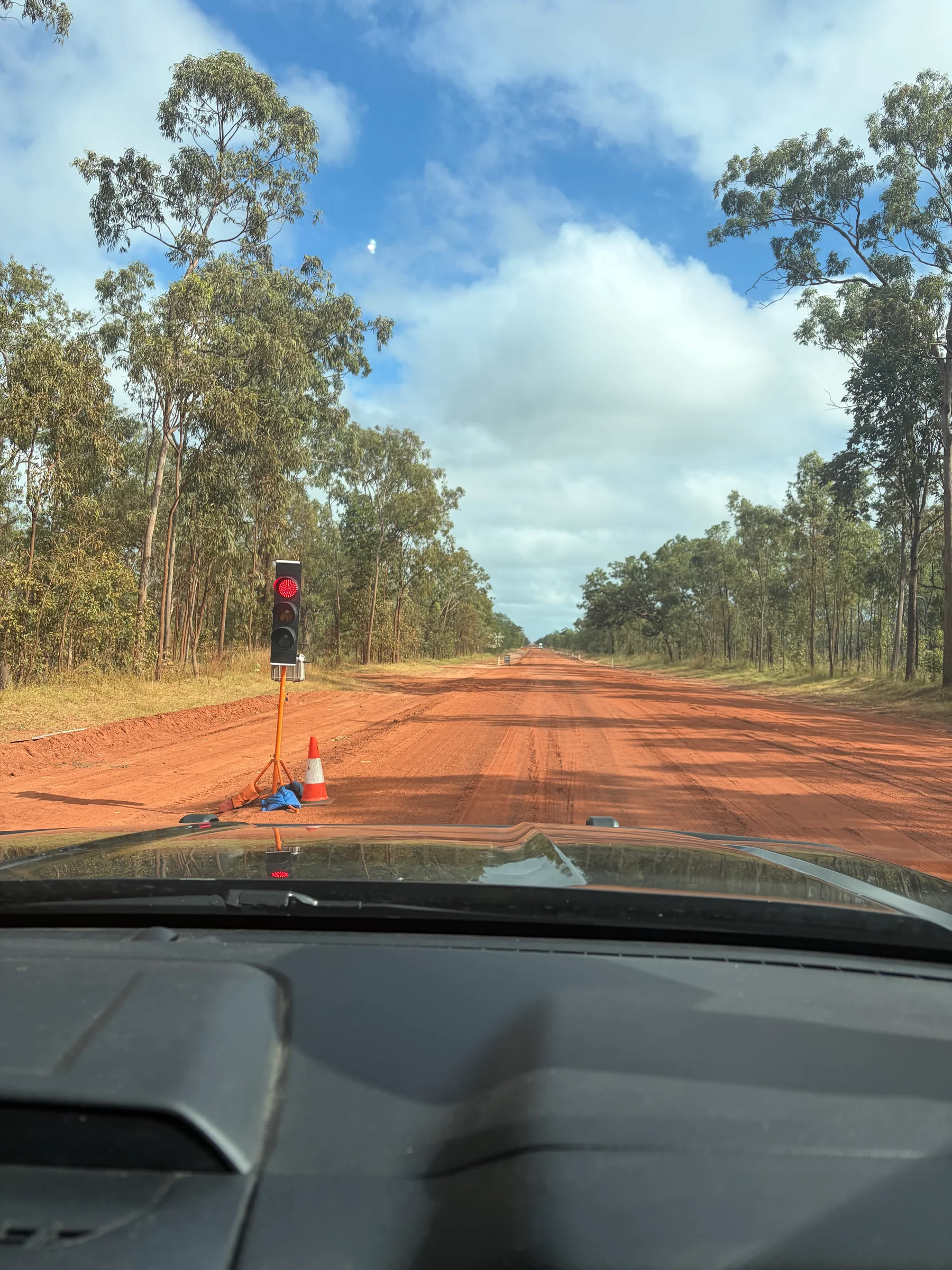
It gets into everything. The car, the tyres, the shoes, the corners you do not think about. It also looks good. The contrast of red road, green bush and grey sky makes the whole place feel very northern very quickly.
Archer River Roadhouse
Before Bramwell, Archer River Roadhouse became our lunch stop.
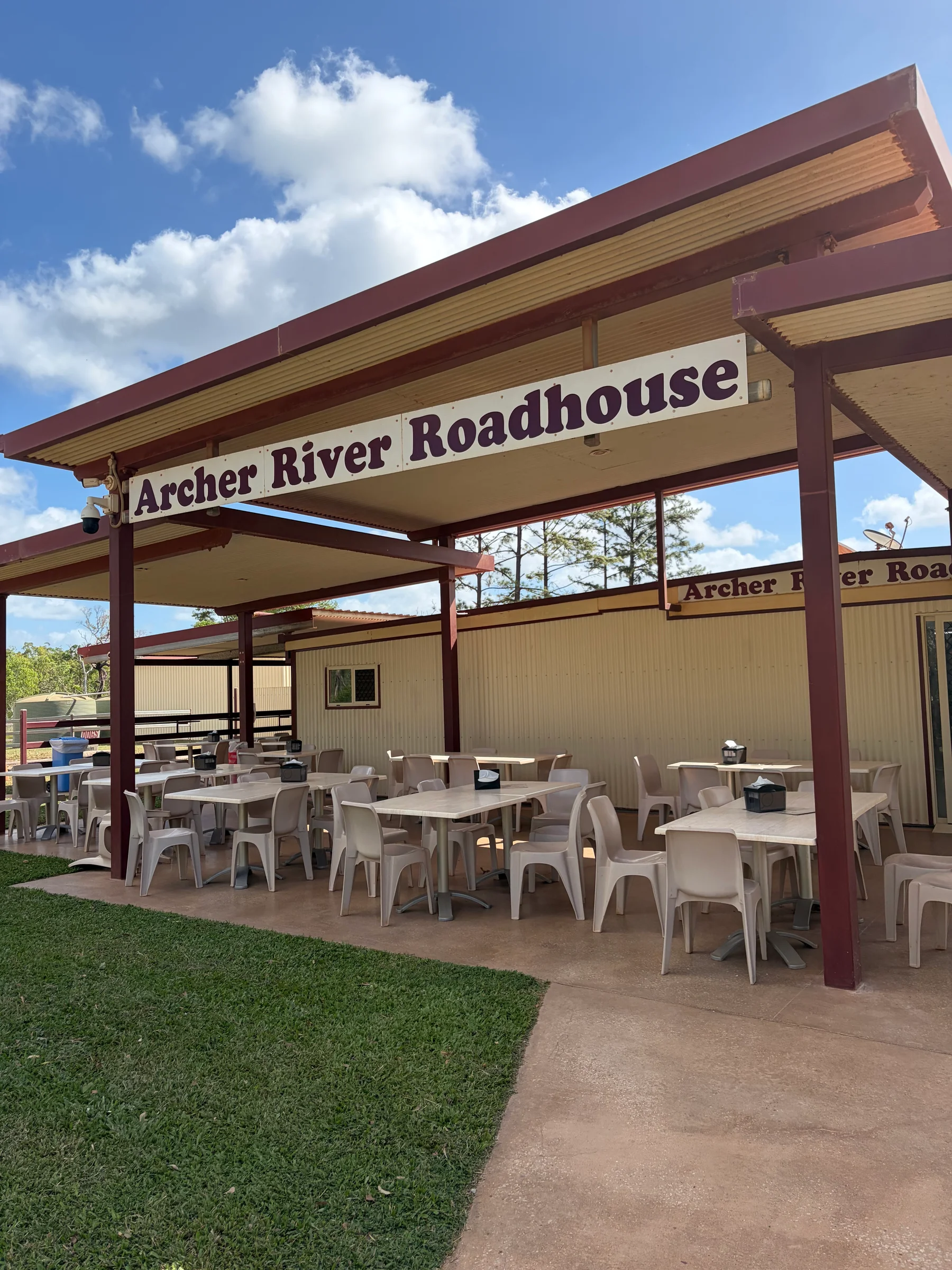
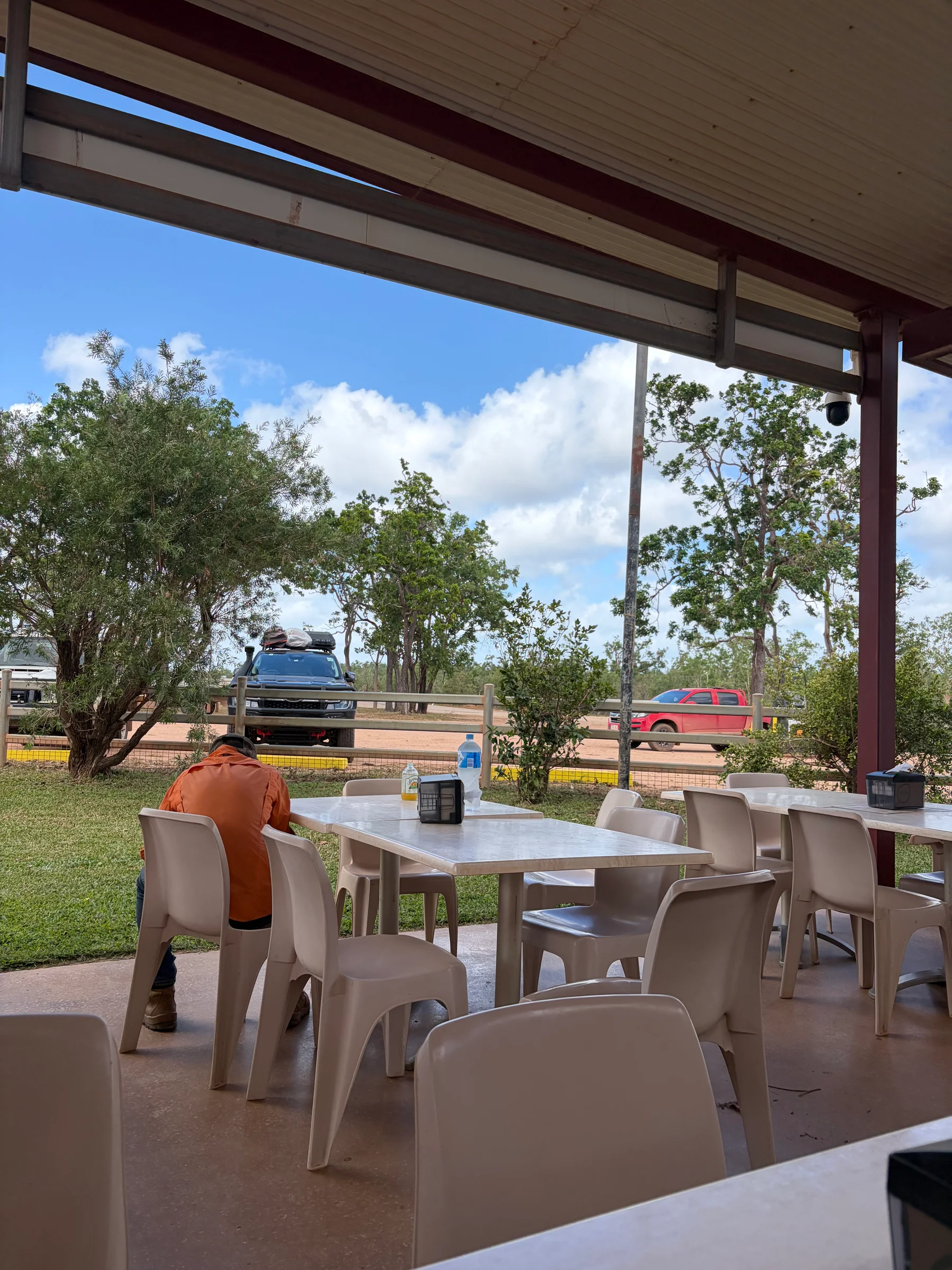
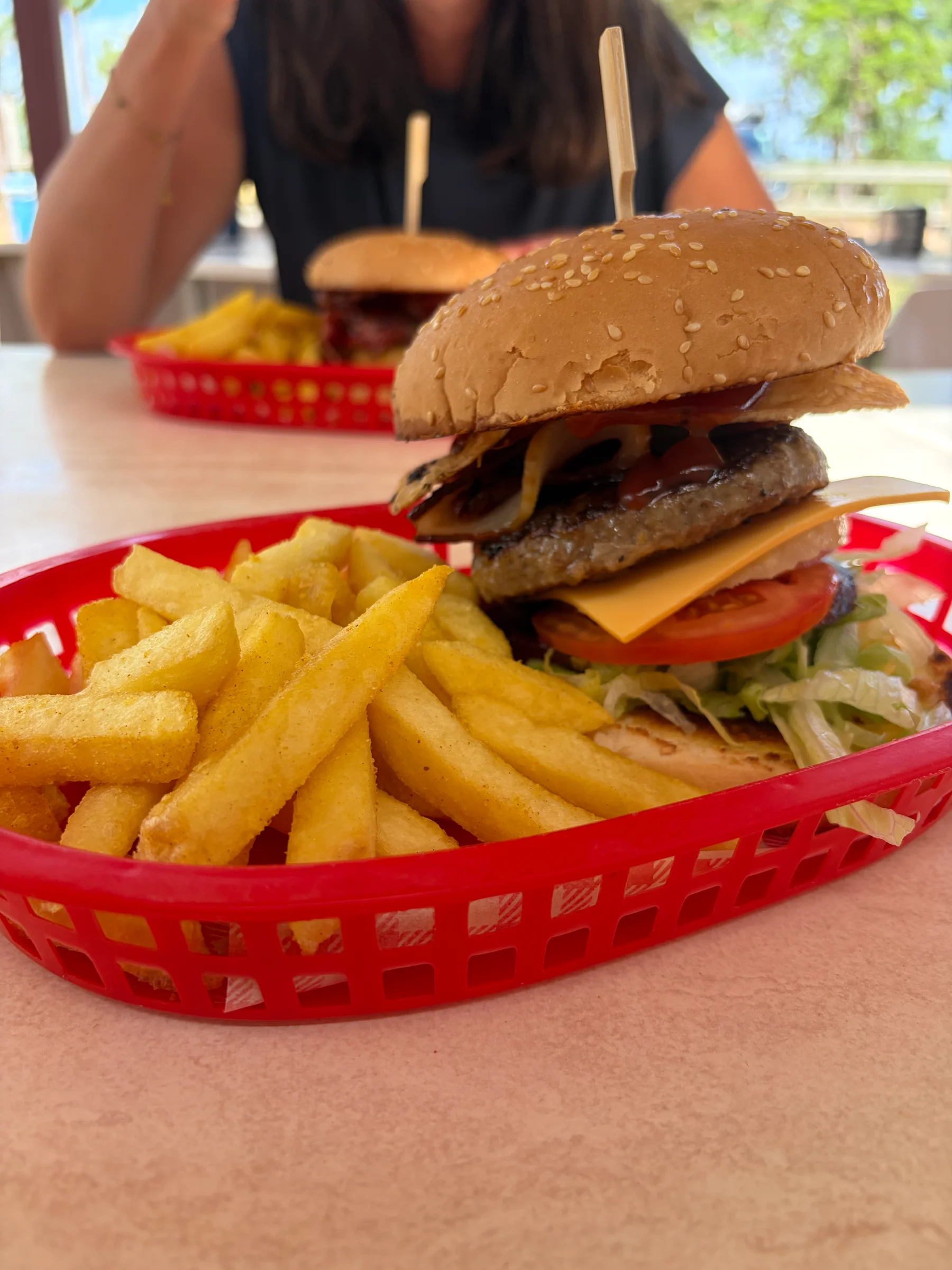
It was a simple decision: we were already on the road, it was the right time for food, and a roadhouse burger sounded like exactly the right kind of Cape York lunch. The burger was genuinely good, not just good because we were hungry and remote. It was worth the stop.
We also had a look around the campground while we were there. It might be useful in another situation, but on that day it did not feel like the right place to stay. The amenities were not in the best shape, and with renovations going on, the whole place felt more like a good pause than somewhere we wanted to settle for the night.
So Archer River stayed what it needed to be for us: lunch, a short reset, and then back onto the road.
Later in the afternoon we reached Bramwell Junction Roadhouse.
Bramwell Junction
Bramwell Junction is where the Old Telegraph Track begins or ends, depending on your direction.
For us, it felt like a marker. We were not just driving north anymore. We were at the edge of the famous Cape York 4WD route, the one people talk about with water crossings, bog holes, bypass roads, winches and all the videos where vehicles do things I would prefer not to do with Roger.
The roadhouse was excellent.
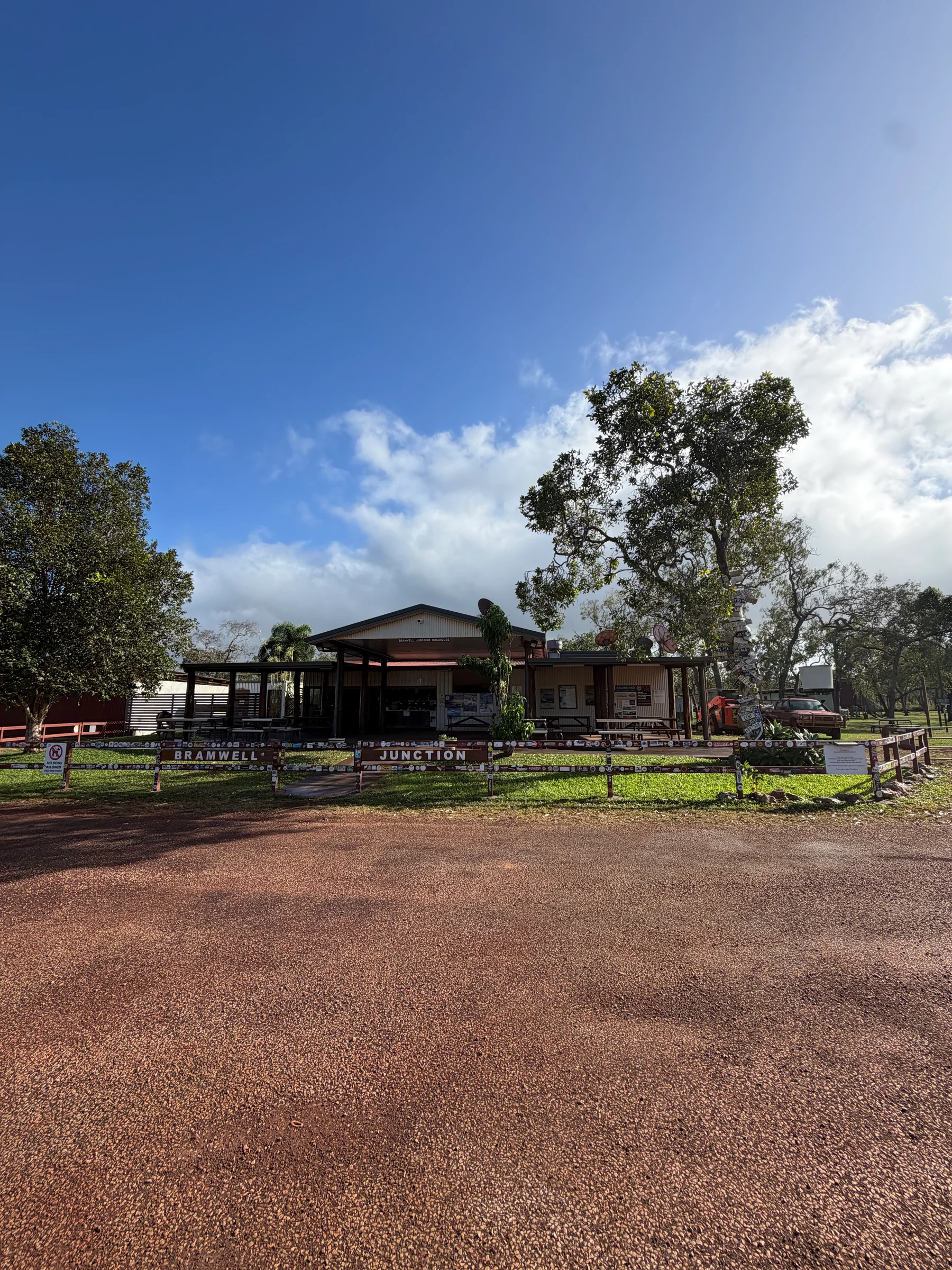
We can highly recommend it. The amenities were very good, and the shower was probably one of the best I had on the whole trip so far. After the spider-heavy station shower the night before, that counted for a lot.
The campground had a real Australian bush feeling, in a good way. Enough space, red dirt around, travellers moving through, and the sense that everyone there was either starting or finishing a section of something. We also got a cold beer, which hit the spot.
There was a big group of dirt bikers staying there. They were celebrating someone’s 50th birthday and all wore very fancy shirts. You could not really look away. It was one of those groups that creates its own weather system around a campground, but in an entertaining way.
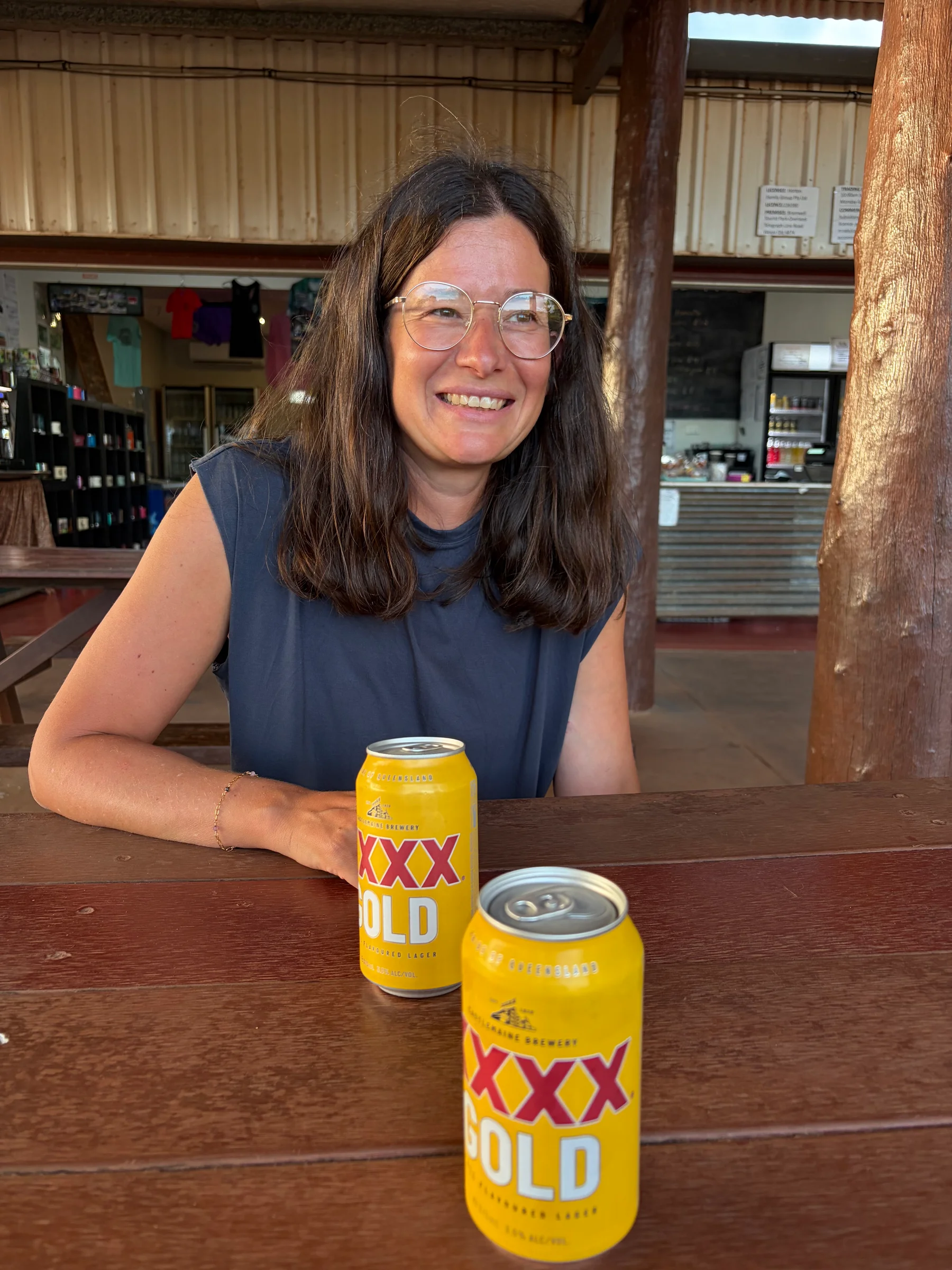
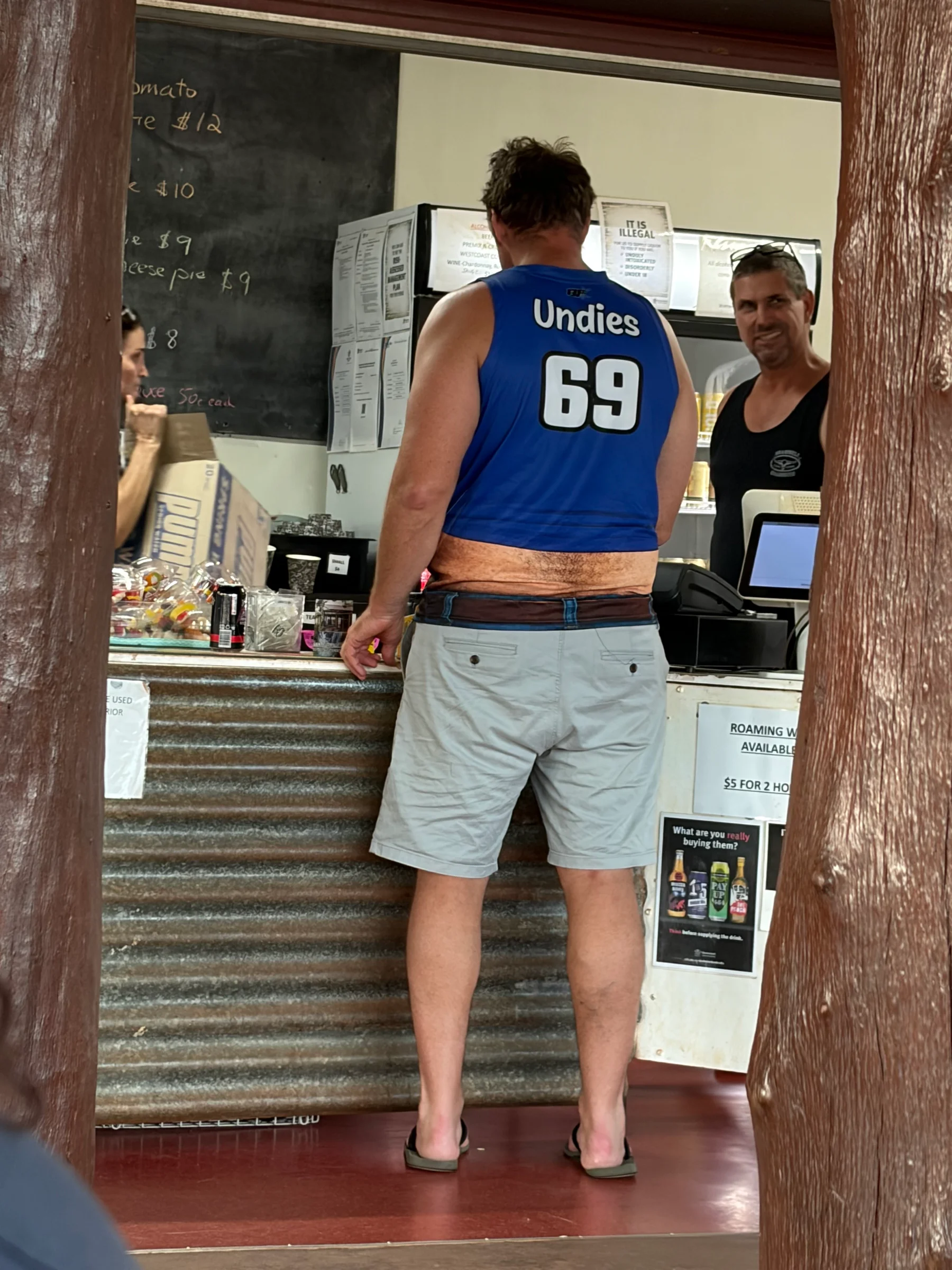
The roadhouse staff gave us the first useful advice about Elliot Falls.
They said the track should be doable, but that there were a lot of washouts. The water crossings should be okay.
That was both reassuring and not reassuring.
Doable is a flexible word. A lot depends on what someone else thinks your vehicle, your skill and your nerves can handle. Still, it was better than hearing that the track was a bad idea.
So the plan was set: Fruit Bat Falls first, then the short section of the Old Telegraph Track into Elliot Falls.
Fruit Bat Falls
This was the day where we were not quite sure what to expect.
There was more dirt road, more evidence of storm and cyclone damage, and fallen trees in places. You could see that the wet season had not just politely passed through. It had left marks.
This was also the day where it became clear that the drive itself was now a big part of the tour.
In this area we were properly in croc country. That meant fewer casual swims and no relaxed fishing from random water edges, at least not for us. We are on the cautious end with that. Hikes were also more limited. So the question becomes: what do you do all day?
Often the answer is driving.
Not driving in the boring commute sense, but driving as the activity. Watching the road, choosing lines, listening to the car, checking weather, noticing the bush change, slowing for dips, reading water, discussing whether something looks worse than it is. It takes more attention.
Our first real stop was Fruit Bat Falls.
It felt safe enough to have a dip there. The water was clear, shallow in parts, with deeper pools as well. The falls themselves were beautiful. It was also still very quiet. For a while we were the only ones there, then two more people arrived.
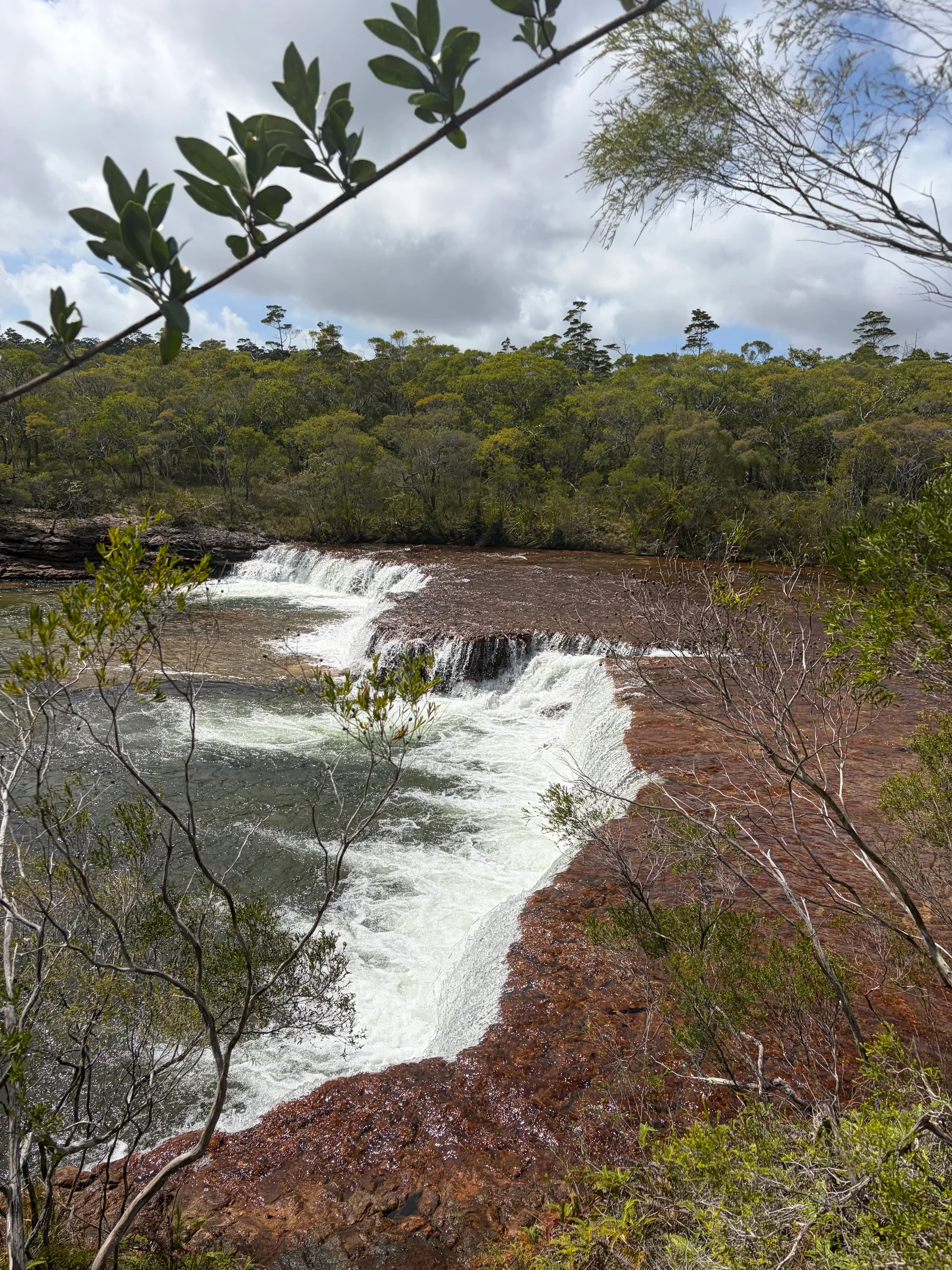
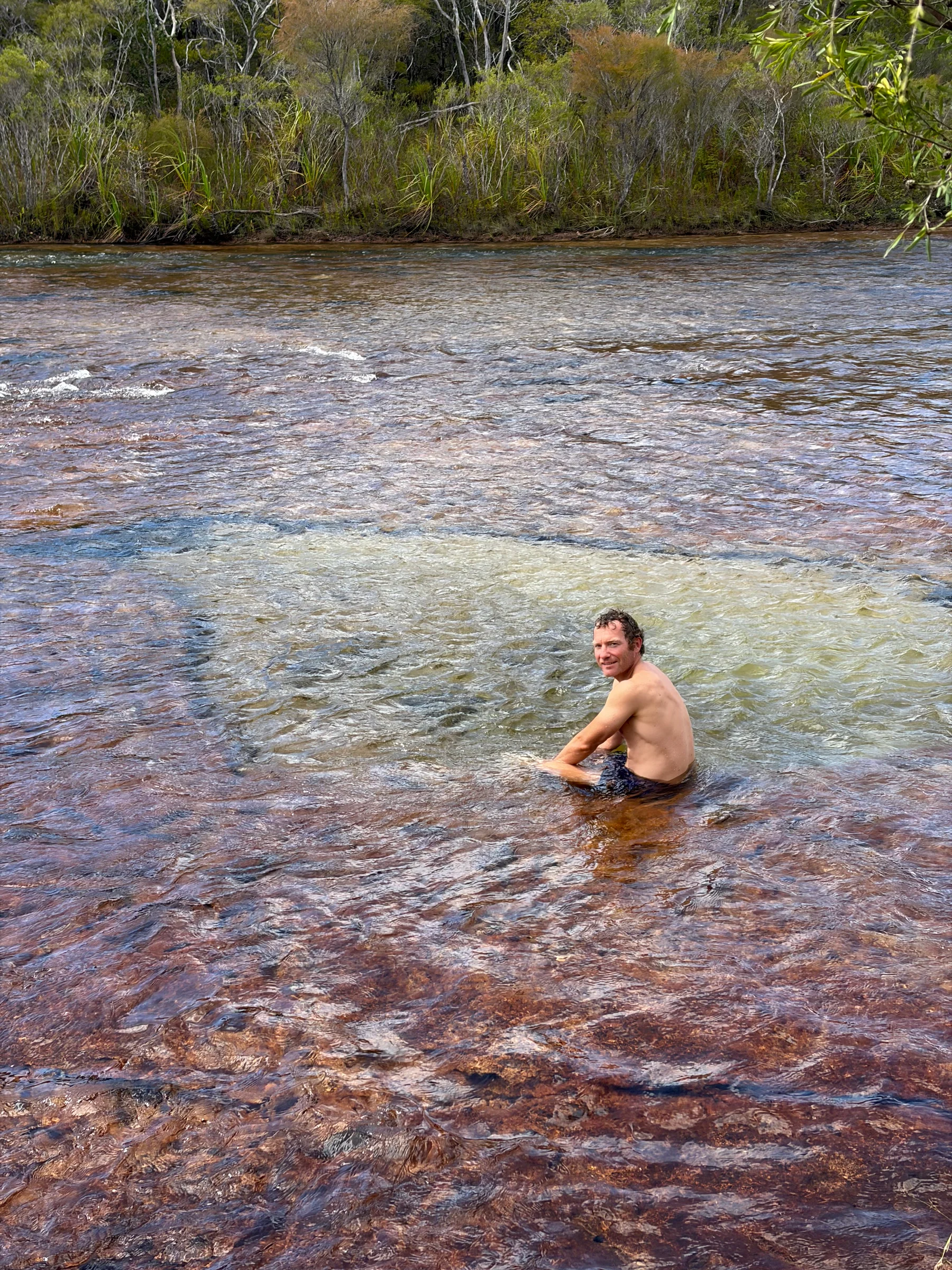
Apparently in a few weeks it would be completely different, with many more travellers and a much busier feel. We were clearly early in the season, and the combination of recent weather and fuel prices probably kept numbers down.
For us, the quiet was excellent.
After the swim we continued towards Elliot Falls. It was only about seven kilometres away, but to reach it you need to drive a small section of the Old Telegraph Track.
That short distance took a lot more mental energy than the number suggests.
The Track Into Elliot Falls
The drive into Elliot Falls was nerve-wracking.
I was very glad for the modifications we had made to Roger. Clearance, suspension, tyres, recovery gear, all of it suddenly felt less like nice-to-have equipment and more like the reason we were comfortable enough to continue.
The washouts were the part that made us most nervous. Some were deep enough or angled enough that you had to think properly about the line. It was not about speed or showing off. It was slow, steady driving, with Steph checking the difficult sections from outside and guiding where needed.
The handheld radios became extremely valuable here.
Before this, they were useful. On this track, they became essential. Steph could walk ahead, look at the angles, check where the wheels should go, and talk me through sections without shouting or guessing. That changed the whole process.
There was one moment where we considered turning around.
We stopped, looked at the track and had a proper think. The concern was not that we would flip the car. It was more the possibility of getting bogged or stuck in a bad place. We do not have a winch, and out there that becomes a real limitation. In the Blue Mountains the same obstacle might have felt less serious because help is closer, the whole situation is less remote and you are not carrying your home. Here it felt different.
In the end we decided to continue.
Roger handled it well. Slow and steady. No hero driving. No drama. But when we finally arrived at Elliot Falls, both of us needed a moment.
We were properly relieved.
It was the first time on the trip where I seriously thought that a winch would have been a good idea. Not because we needed one that day, but because the margin felt different in a remote place.
Alone at Elliot Falls
We had not booked Elliot Falls before arriving.
Once we drove around the campground, we realised we were going to be the only ones there. So we got Starlink out, booked site 7, and chose it because it was the least overgrown.
The campground did not look like it had been properly maintained yet for the season. That was surprising, but also not completely unexpected after the weather the region had been through. Some areas looked more grown in than ready.
Being the only campers was strange.
On one hand, it was great. Quiet, private, no generators, no other cars arriving late, no campsite noise. On the other hand, it was a little unsettling. There is a big difference between a peaceful campground and a campground where you know nobody else is around if something goes wrong.
Elliot Falls and Twin Falls were stunning.
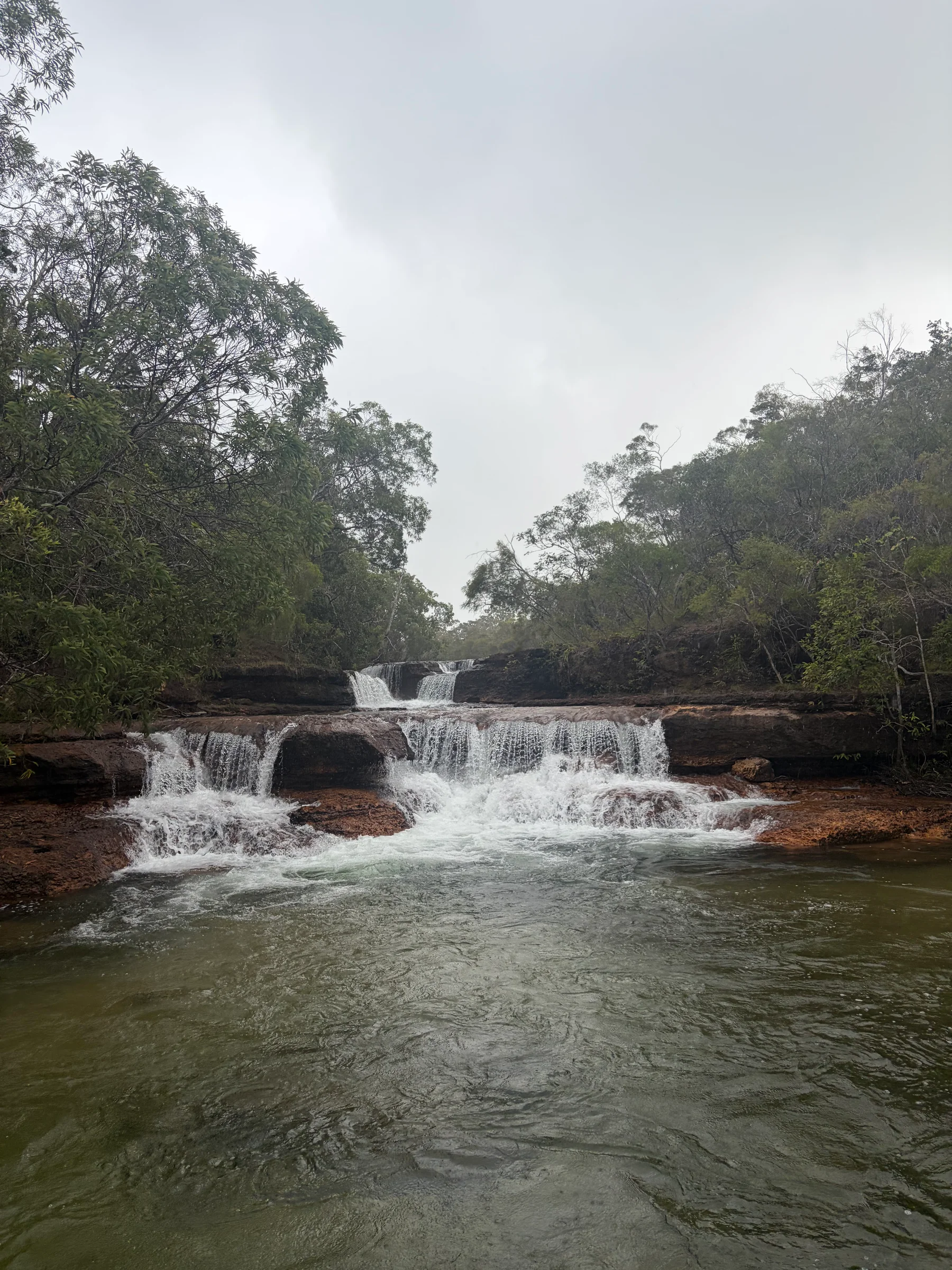
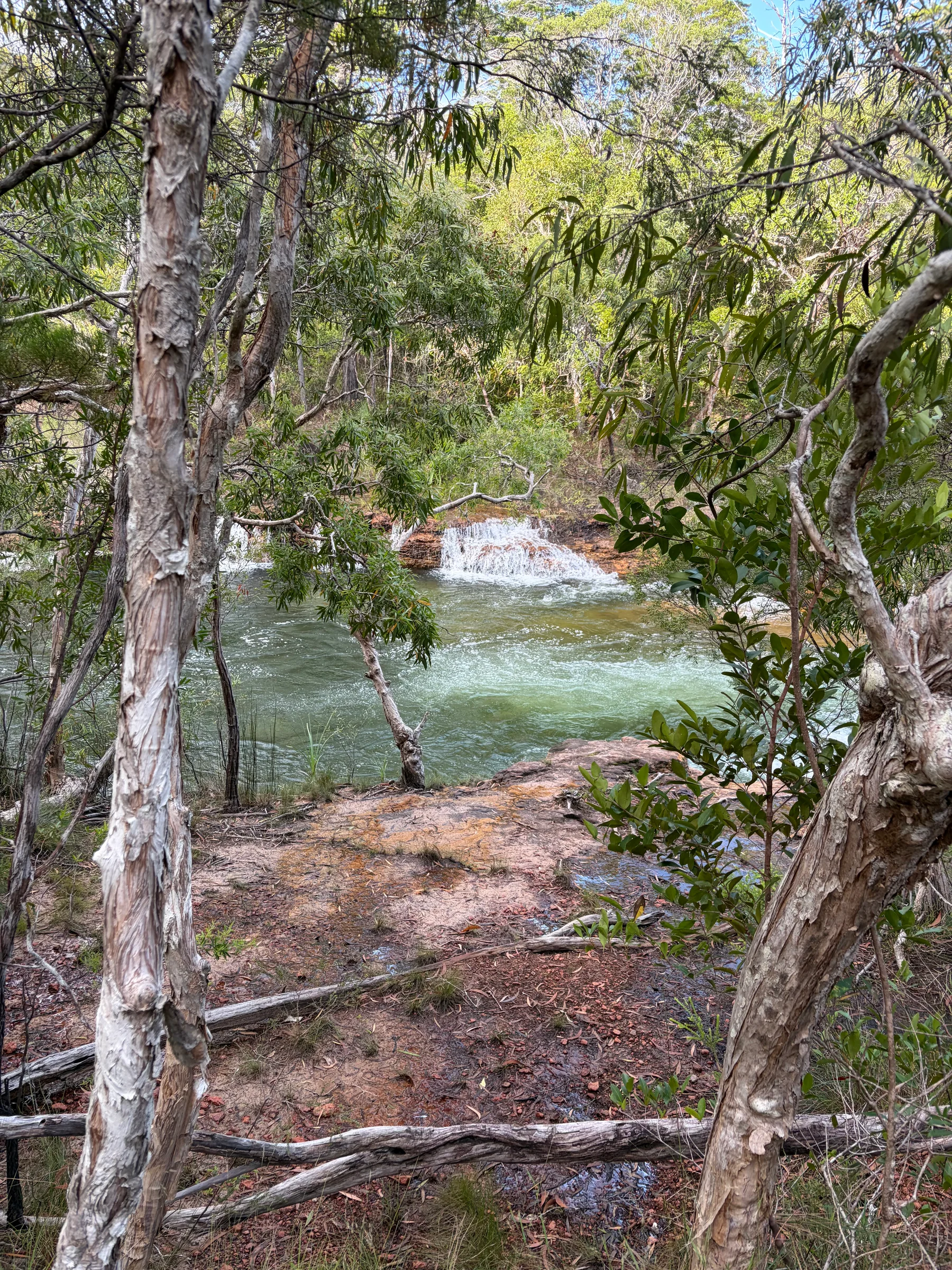
The water, the rock, the small walking tracks and the rainforest feeling around it all made the place feel like a real reward after the track in. It was also very inviting for a swim, but I had read about previous crocodile sightings in the broader area in past years, and that stayed in my mind.
Standing there alone, with no other people in the water and no one around the campground, I did not feel like testing the theory.
So we looked, walked and enjoyed it from the edge.
The evening was beautiful and slightly scary at the same time. Just as I said to Steph that there did not seem to be any mosquitoes, the situation changed. They arrived very quickly. So we sprayed ourselves, cooked quickly, and the whole dinner became more stressful than planned.
Just when you think the old bites are getting better, the next group turns up.
Still, the night was fun. We played Australian country music, Slim Dusty and others, quite loudly. There are not too many better places for that than a quiet Cape York campground where you are the only people around.
The Second Day
After the first night alone at camp and the mosquito battle, we had a lazy start.
The weather was hot and humid. We had expected it might improve, but it stayed that way. There were occasional showers, not heavy long rain, mostly short drizzle. The drizzle made the whole place feel more rainforest-like. It also meant everything had that slightly damp feeling again.
I used some of the time to work on the blog.
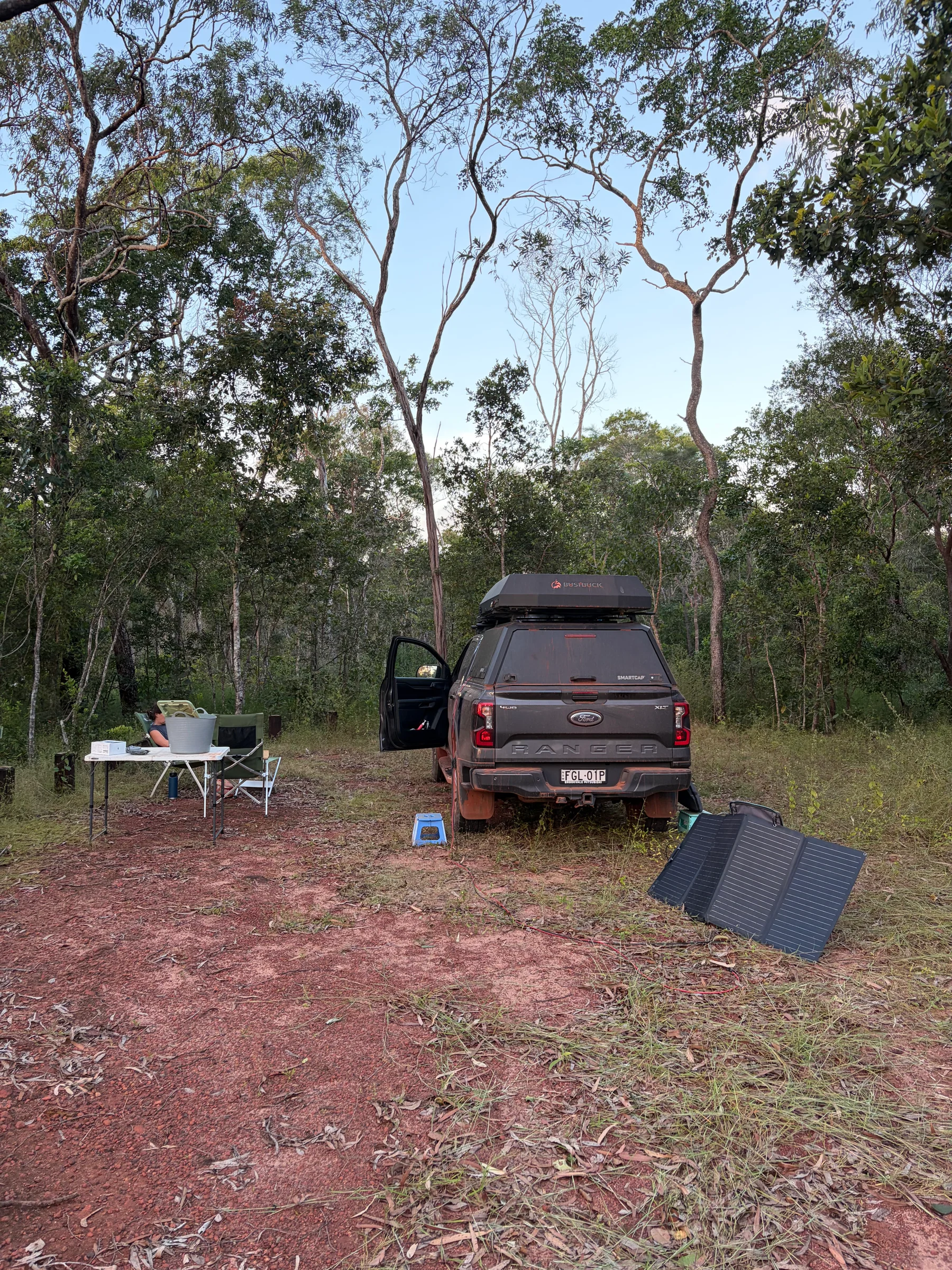
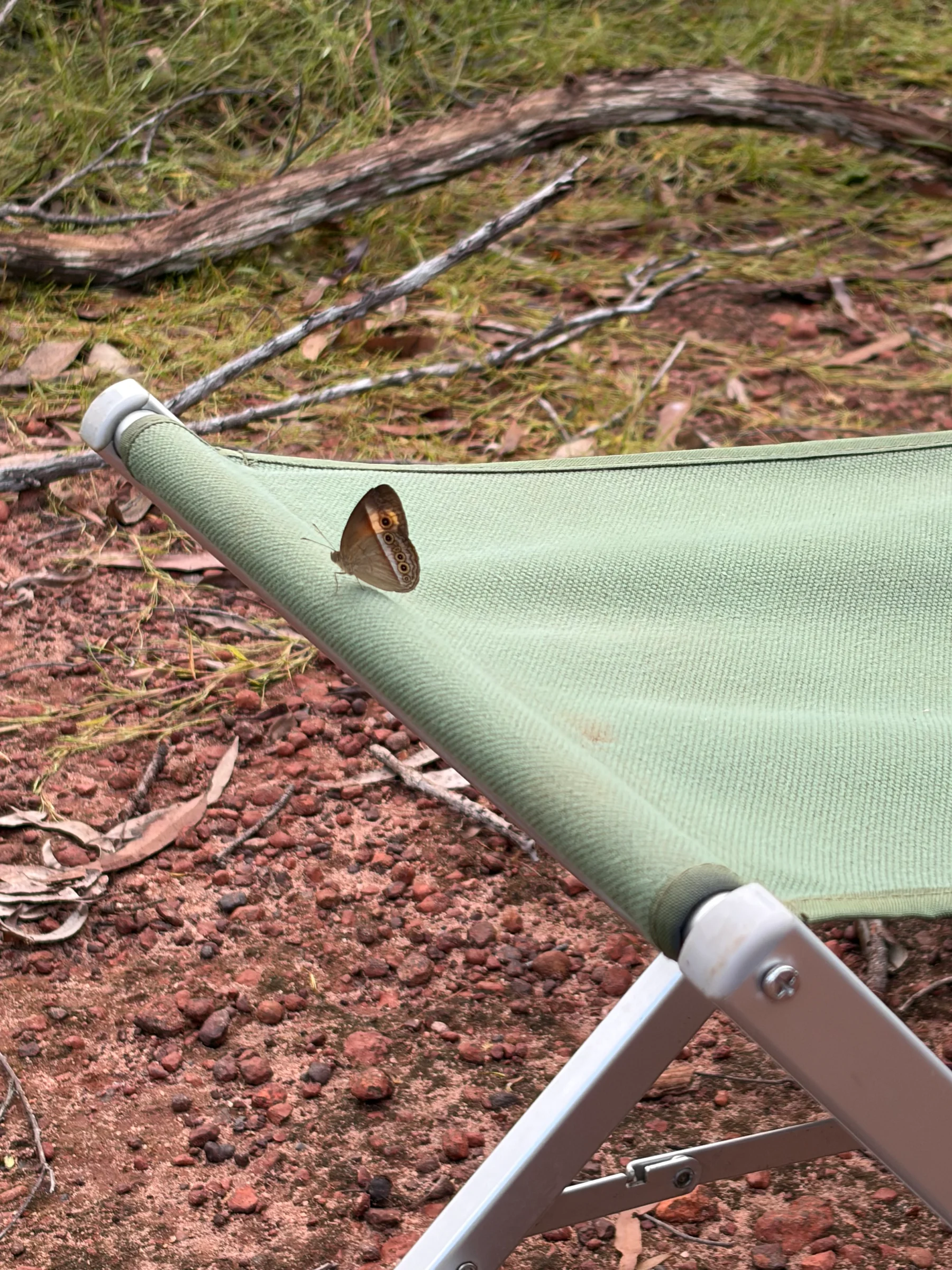
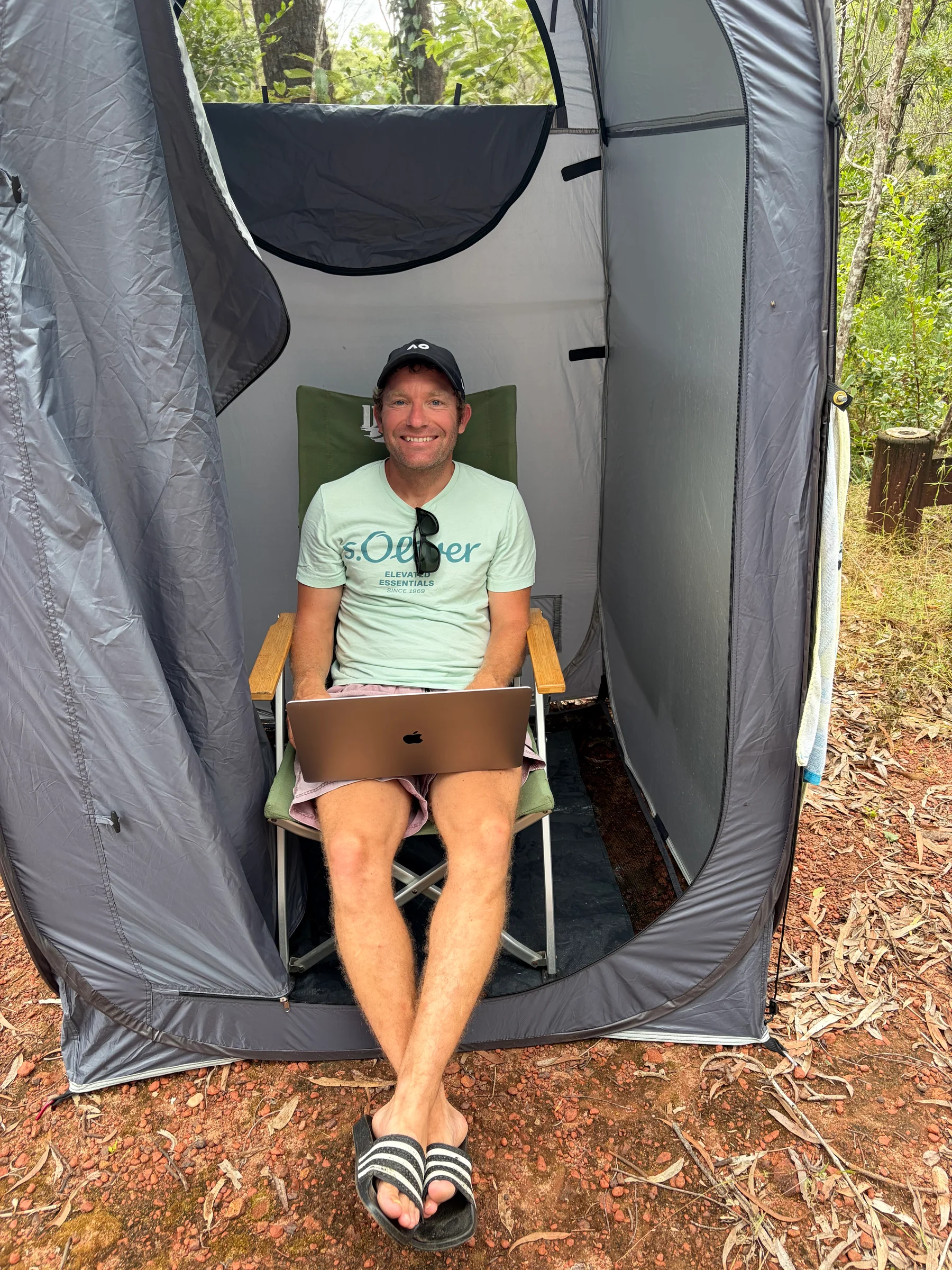
In the afternoon we did a jungle gym session. Sweaty is probably the polite word for it. Training in that humidity is different. You do not need to do much before your body decides it is working hard.
After that we checked out Elliot Falls again. This time there was another couple in the water. The water also looked much clearer than the day before. After checking the surroundings and seeing other people swimming, it felt safe enough for us to have a dip as well.
That swim was incredible after the gym session.
Originally we had thought about staying another night, but we decided to move on the next day. Three nights would have been nice in theory, but there was also the track to get back out, more road north, and the feeling that we were ready to continue.
Then another surprise: fellow campers arrived nearby and played reggae music.
After being completely alone, even that felt like a big change.
Not Taking Roger Through That
That evening we watched some content from a group who had officially opened the Old Telegraph Track for 2026 a day or two ago.
The footage made our jaws drop.
One of the crossings, Nolans Brook (just a bit north or Eliot Falls), had water well over vehicle bonnet height in the clips we saw. I still do not fully understand how they managed to get the cars through. They obviously knew what they were doing, had the right gear and were in a group, but it was very clear to us that this was not our plan.
If there had been any small doubt before about doing more of the Old Telegraph Track with Roger, that doubt was gone.
We would get back to the development road.
That was not a disappointing decision. It was the correct one. We are travelling in the car we live in, with a setup we need to keep working. There is no value in proving something to ourselves by taking unnecessary risks with water crossings that can destroy a vehicle quickly.
We had already had our first small taste of the track, and it was enough.
We also learned from the previous night. This time we ate during daylight, put up the mozzie tent properly and were much better protected.
That felt like the right ending to the Elliot Falls stop. We had done the road in, had the reward, managed the insects a little better, and decided what kind of Cape York driving made sense for us.
The next morning we would have to drive the same track back out.
I was not exactly relaxed about that part, but at least we knew what was coming.