Highlights
Best moments
- The Riverway parkrun in Townsville and the quick lagoon swim afterwards.
- Swimming in the river at Babinda Boulders on a humid rainforest morning.
- Driving the coastal road north of Cairns towards Port Douglas.
Failures
- Postponing the Atherton Tablelands because the weather forecast did not look good.
- Skipping the Cooktown museum because we were too late and did not want to rush through it.
- Still needing gas, supplies and a fish knife before heading further north.
Notes from the road
- Long driving days are manageable when we change drivers, listen to audiobooks and keep the rhythm simple.
- Babinda Boulders is a good overnight stop, but not a place we would stay for multiple days.
- Rainforest showers can make everything wet and still make the place look better.
- Cooktown was the last easy pause before the Cape York driving started.
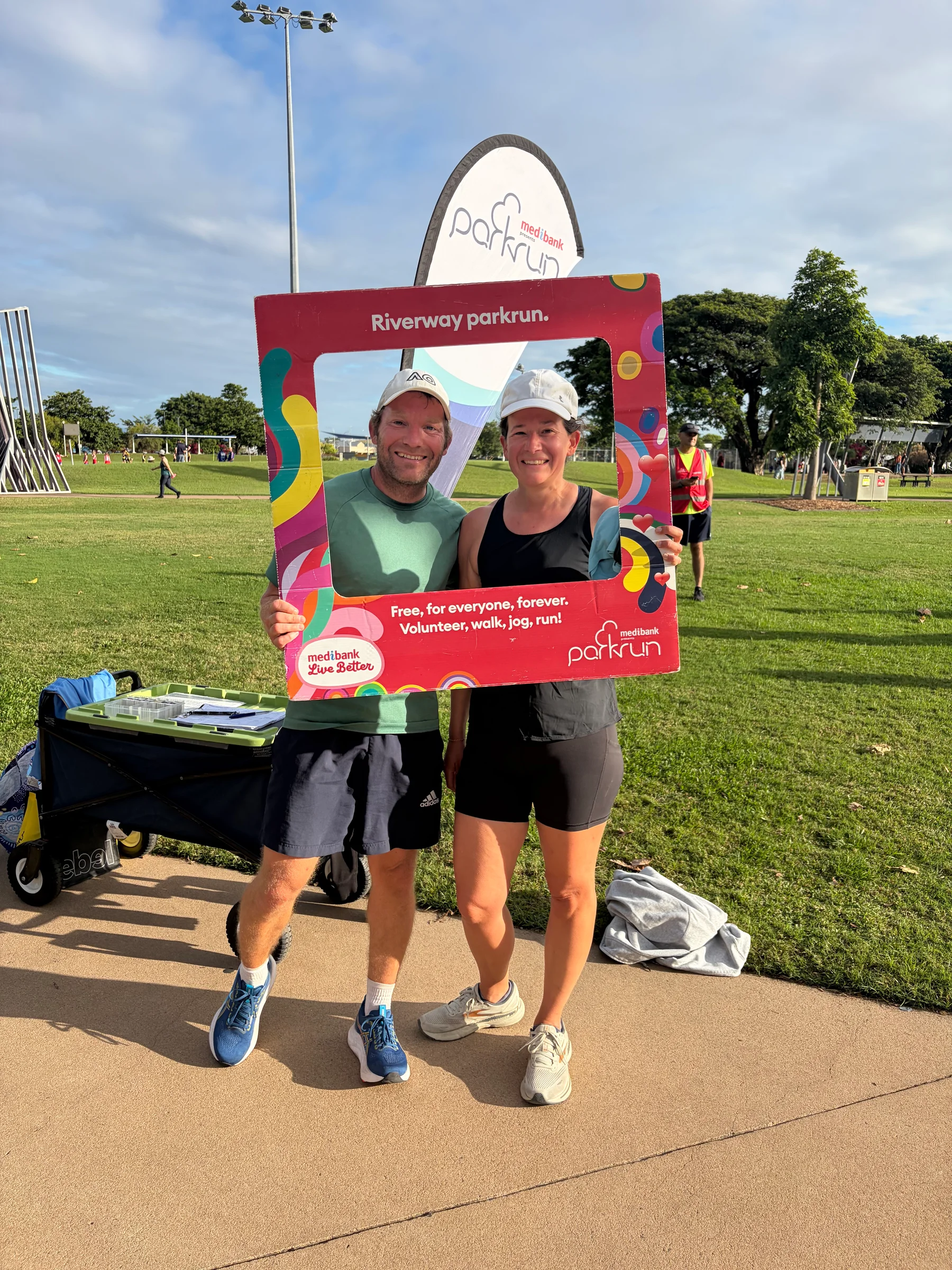
Townsville started with a 7am parkrun.
That was a good way to leave the city. After the ferry day to Magnetic Island, pizza and a night in a caravan park that was fine but not especially memorable, it felt good to move early. The Riverway parkrun follows the river and had a relaxed community feeling. It was warm already, but still runnable compared with what would come further north.
I ran the first 3.5 kilometres with a random stranger who also worked in tech. He told me he had moved to Townsville from Brisbane with his family because his three kids are autistic and the support in Townsville was better for them. It was a short conversation, but quite personal for a parkrun. Then the run ended, and I probably will not see him again.
I did not find him again at the finish. I kept going for another four kilometres, then met Steph at the end.
After that we went for a quick dip in the free lagoon and used the showers there. Free public swimming pools and lagoons are still one of the great Queensland things. We also watched kids playing AFL in the park. Rugby league is probably the more obvious code in North Queensland, so it was interesting to see a small junior AFL game there. From the outside AFL still looks a bit chaotic to me, but the basic flow is starting to make more sense.
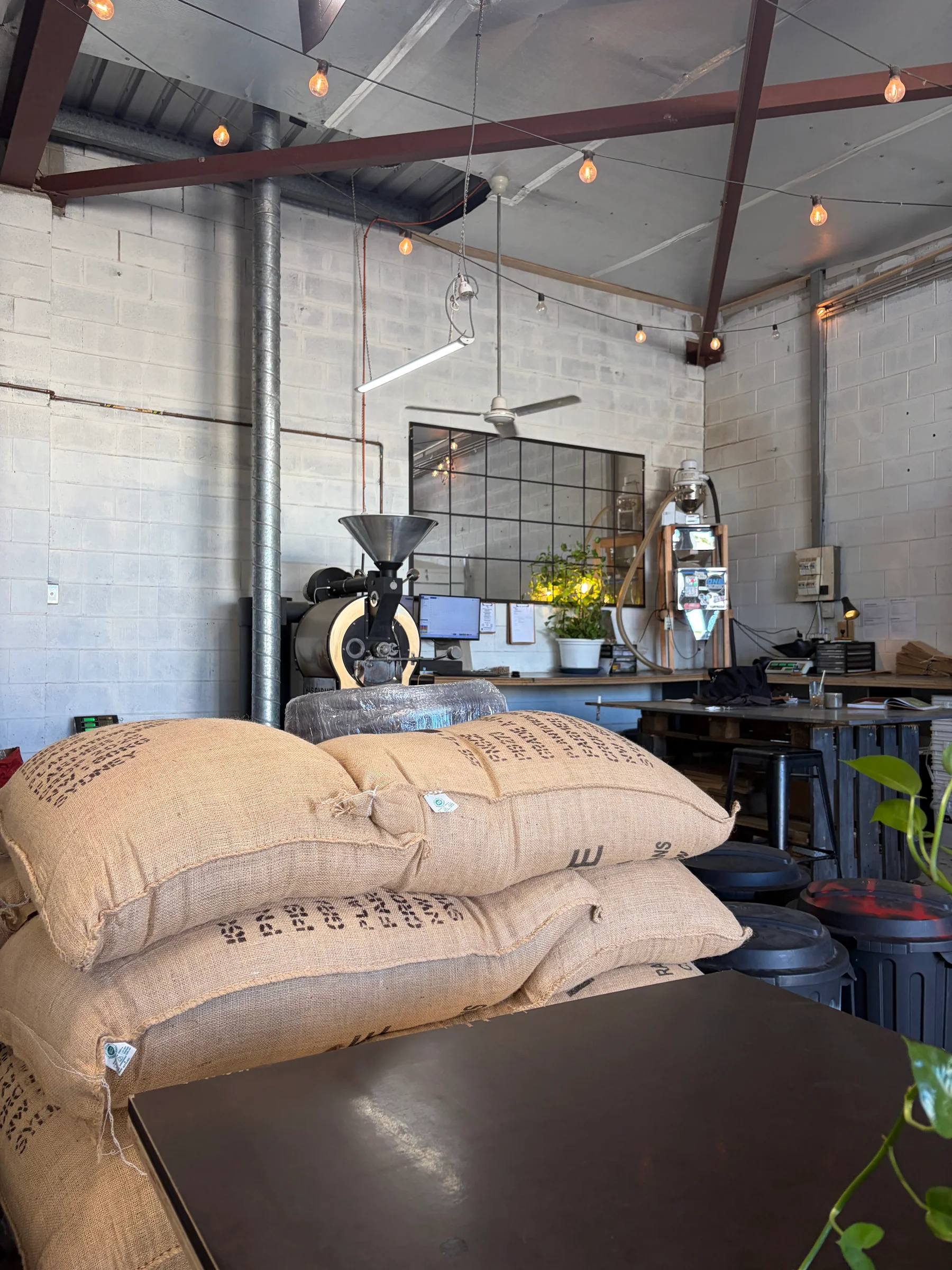
Townsville then gave us the chance to do the less interesting but necessary jobs: refill gas, buy supplies, and get a fish knife. Fishing had become real enough that the normal kitchen knife situation was no longer good enough.
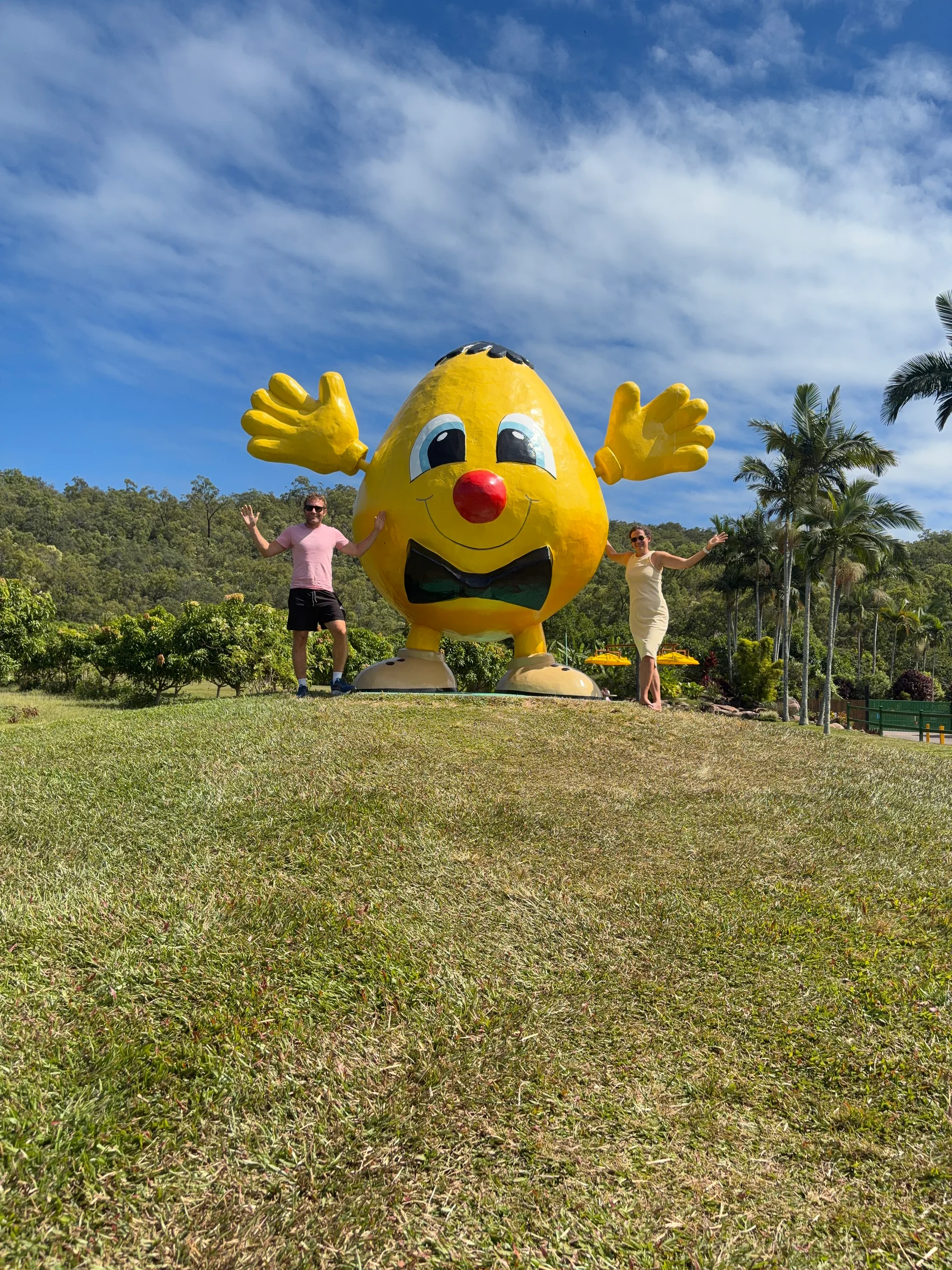
Before the route decision, there was one more very Australian interruption: the Big Mango Man at the Frosty Mango.
This is not the same as the Big Mango near Bowen. That one is just a large mango. This one has arms, legs, a red nose and a bow tie, which somehow makes it both worse and better. We stopped, took the photo, accepted the absurdity, and continued north.
Then we had to make a route decision.
Skipping the Tablelands for Now
The original idea had been to head towards the Atherton Tablelands.
The weather forecast did not support that idea. Rain was coming, and we did not feel like driving into a wet inland loop just to tick it off. The Tablelands will still be there when we head west. Forcing a plan because it exists on the map is usually not necessary.
So we postponed it.
Instead, we decided to drive north and stay at Babinda Boulders for the night. It was a free camp, had a swimming area that was considered croc-free, and put us further towards the rainforest and Cooktown.
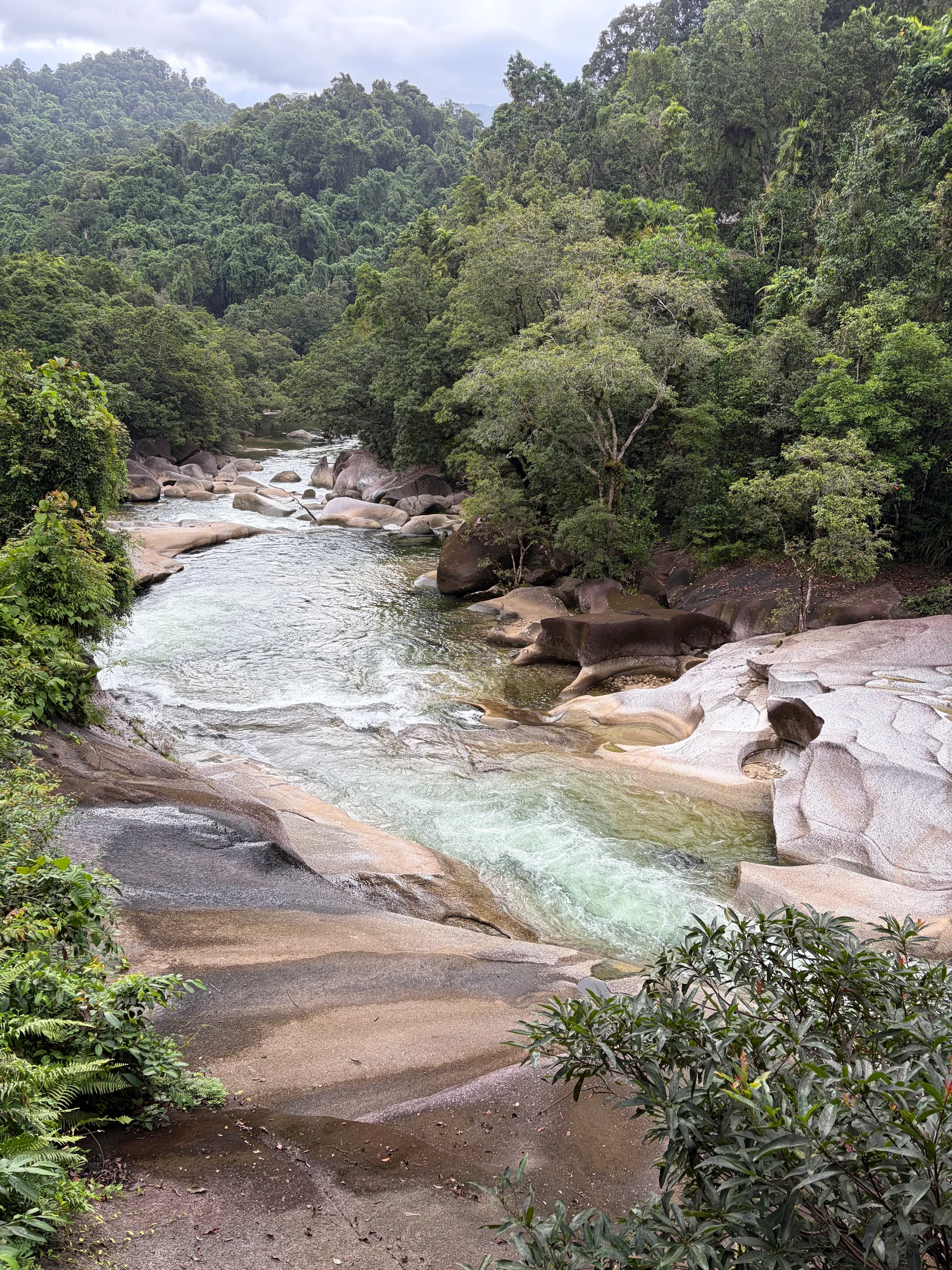
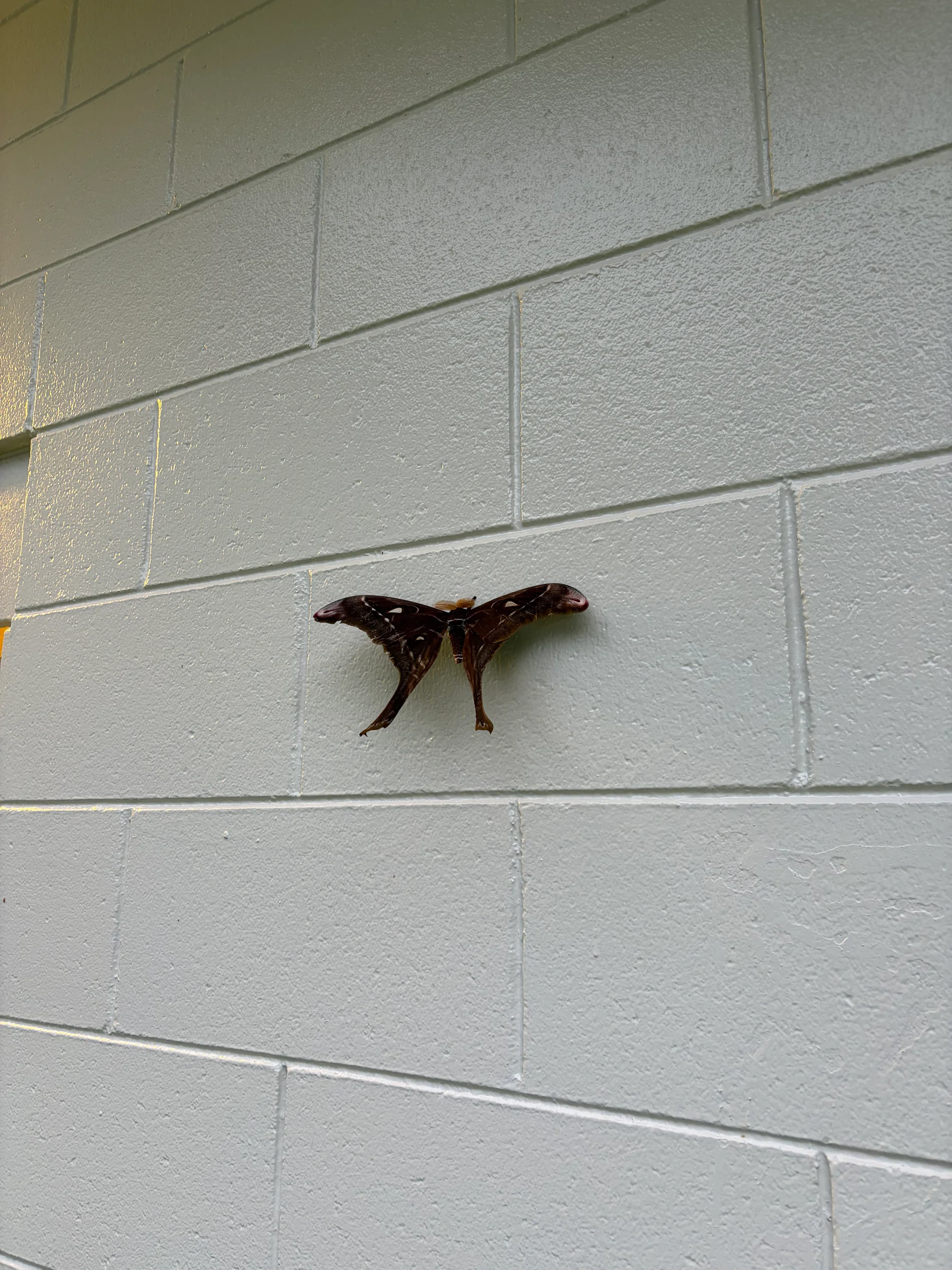
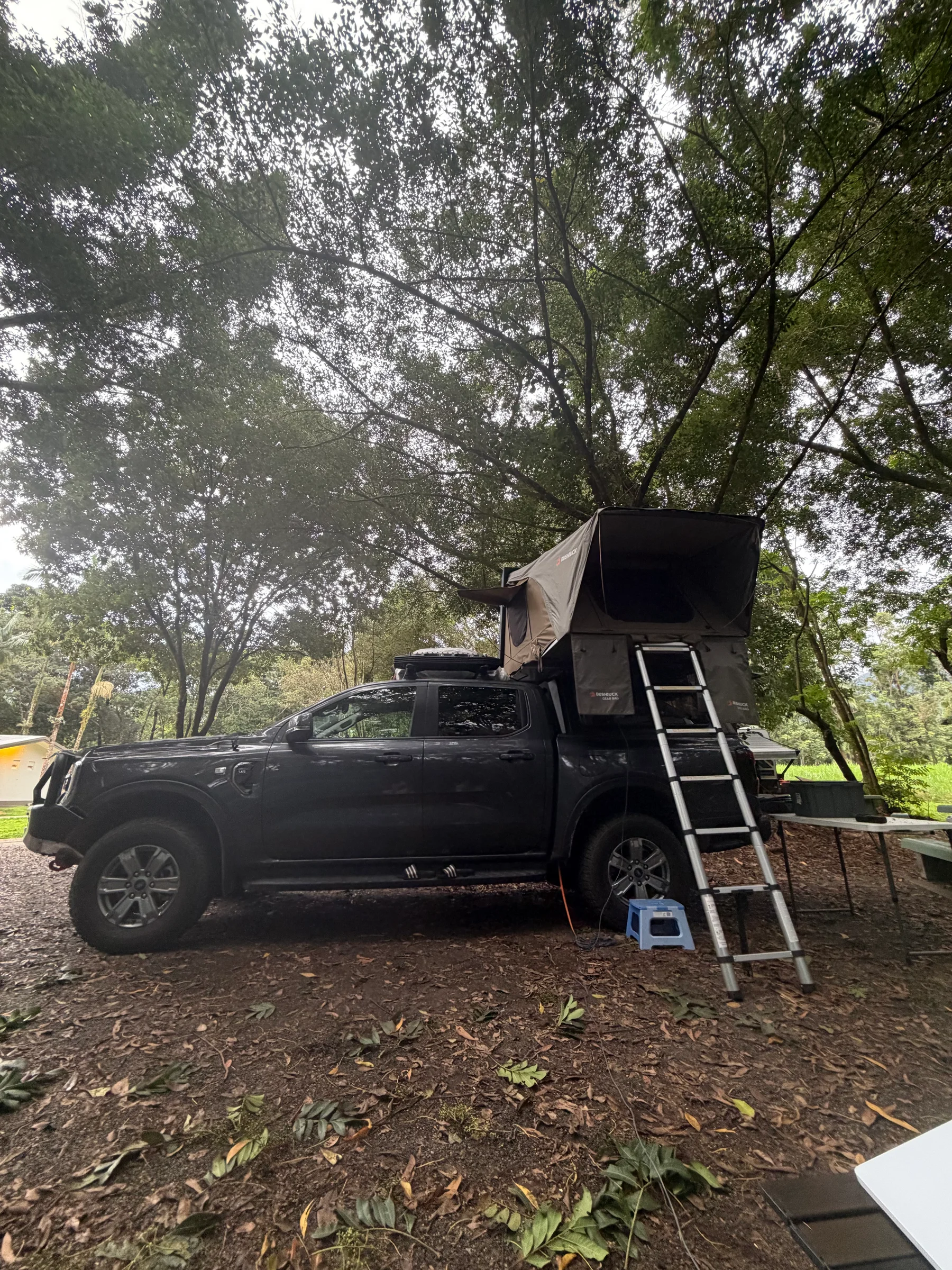
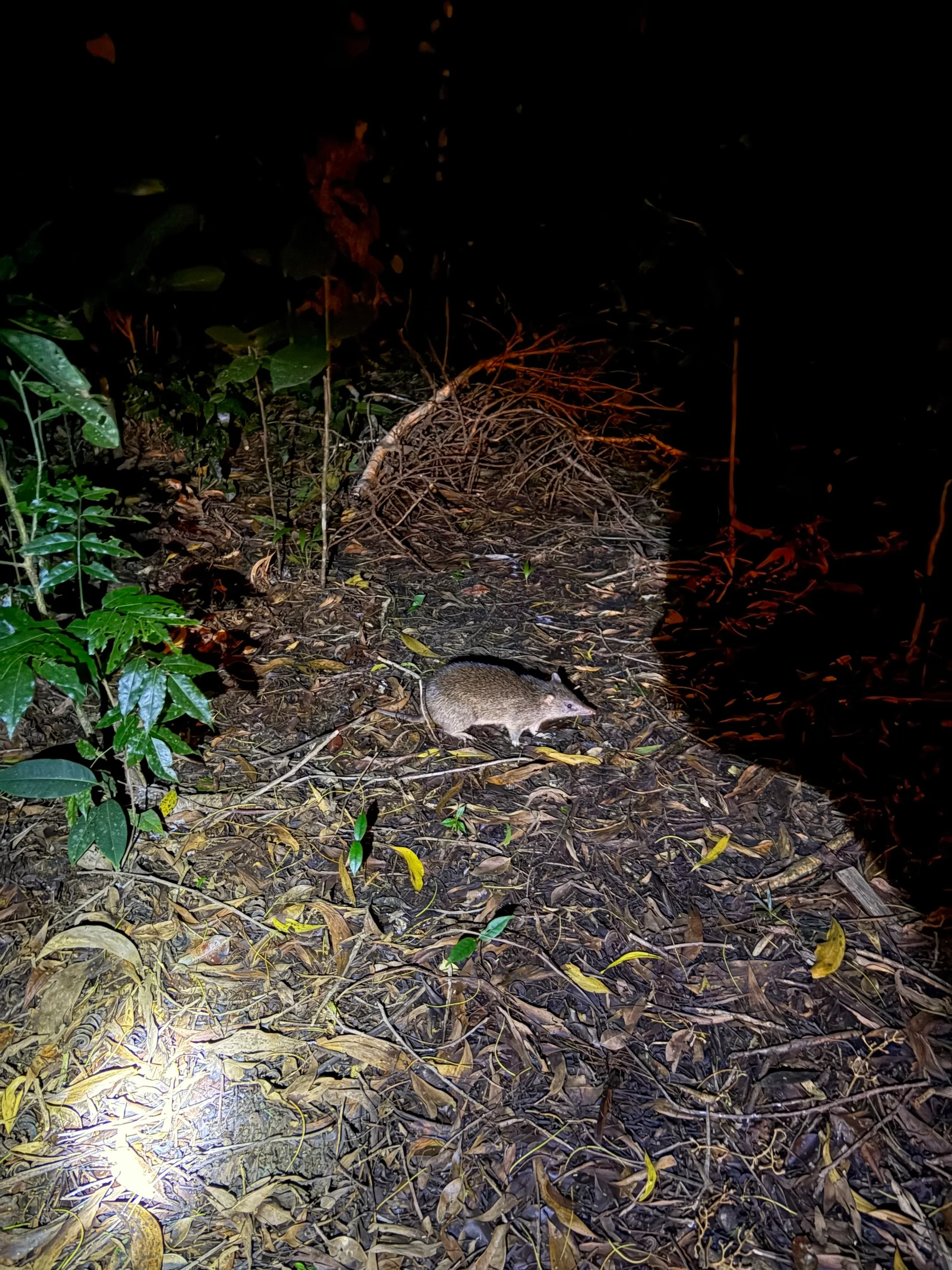
The drive north was straightforward. We arrived around 3pm, which turned out to be a good decision because the camp filled up later in the afternoon. There were limited spots, and by evening it was clear that arriving early had saved us some stress.
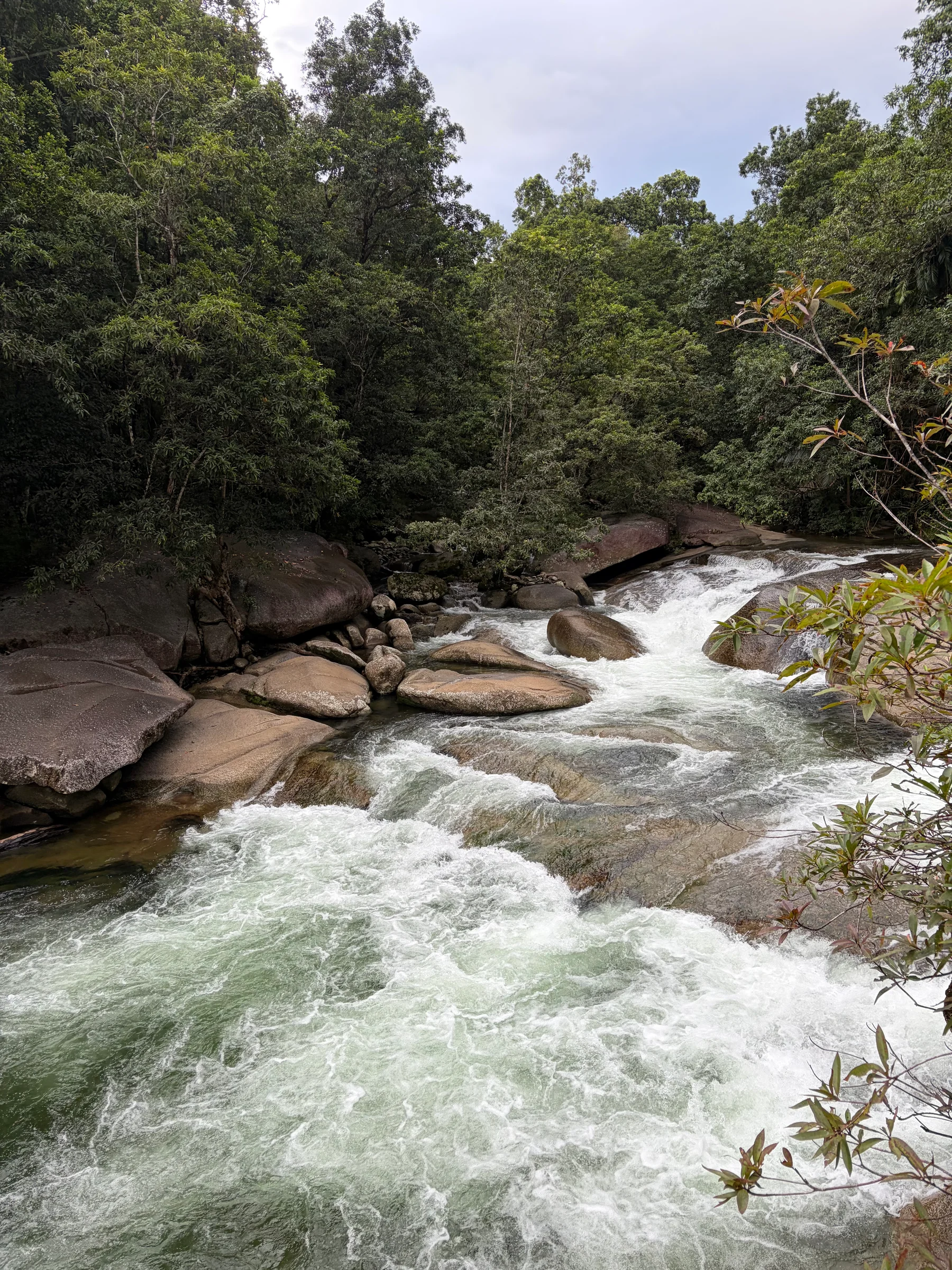
Babinda Boulders is a beautiful place, but it also has a serious edge. The water is clear, the rainforest is close, and the boulders make the river look inviting. At the same time, the warning signs are very direct. People have died there, mainly because of the force of the water around the boulders, holes and underwater sections. The safe swimming area and the dangerous sections are not far apart.
We did the short walk along the river and read the warning signs properly.
That was enough information for us. We stayed cautious.
At night we used Starlink and watched a movie. Not very wild, but that was the evening. The camp was good for one night. I would not stay there for several days, but as an overnight stop with a river, toilets and rainforest around it, it worked well.
Rainforest Morning
The next morning we started with a swim in the river.
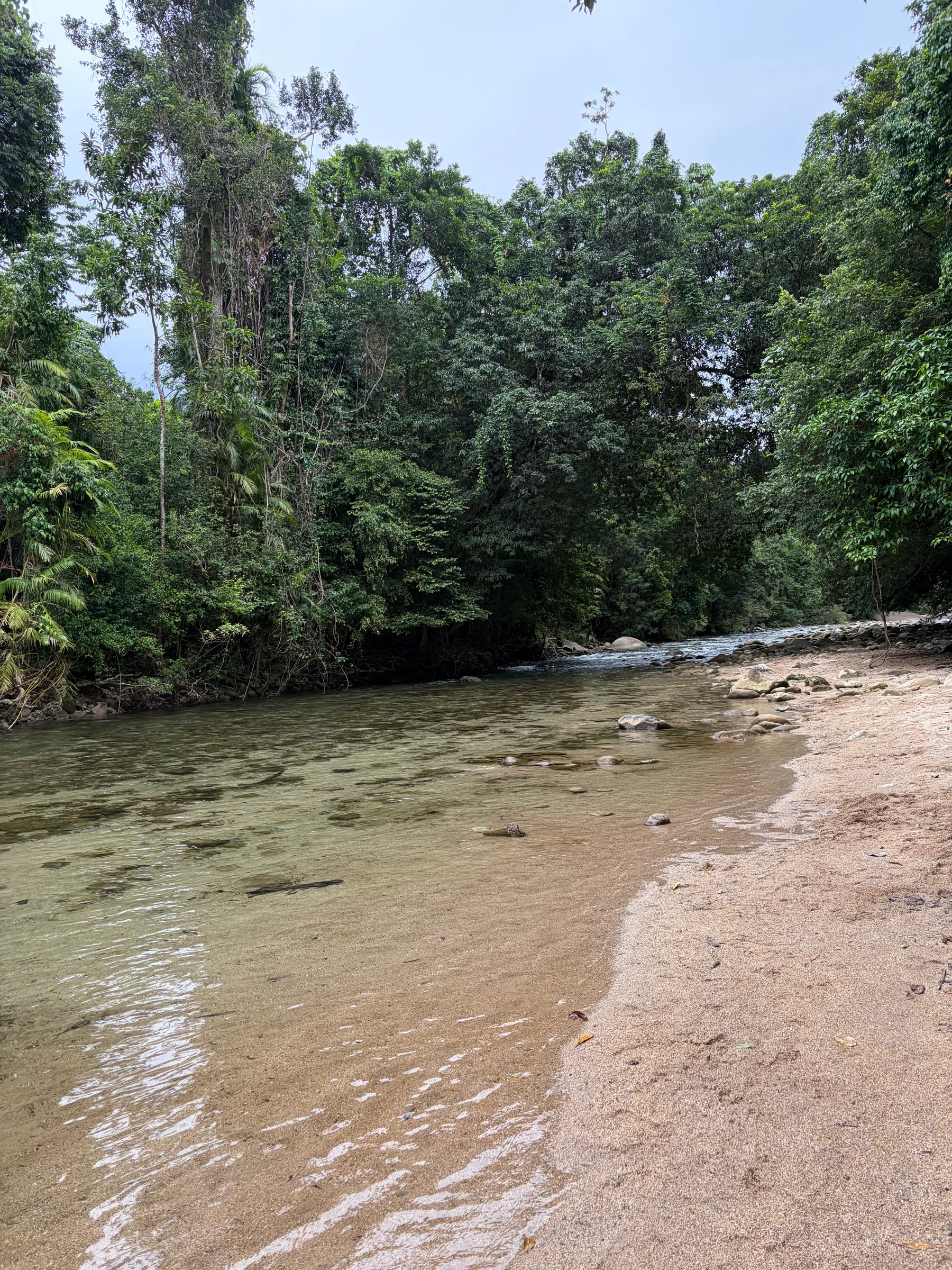
That was a very good decision. It was humid and warm, and there had been showers through the night. Not heavy rain, more the classic rainforest wetness where everything feels damp. The showers made the place look better rather than worse. The green was deeper, the air was heavier, and the river was the right way to start the day.
After the swim we packed up and continued north.
We decided to skip Cairns.
Not because Cairns is not worth visiting, but because it was not what we wanted at that moment. We were in a moving rhythm and did not feel like a city stop. Luckily the GPS sent us onto the coastal road from Cairns towards Port Douglas. That road is beautiful.
On one side you have the ocean, on the other the rainforest-covered hills. The road curves along the coast, and even from the car the landscape felt different. We had been moving north for weeks, but this section made it more obvious. Greener, wetter, more tropical.
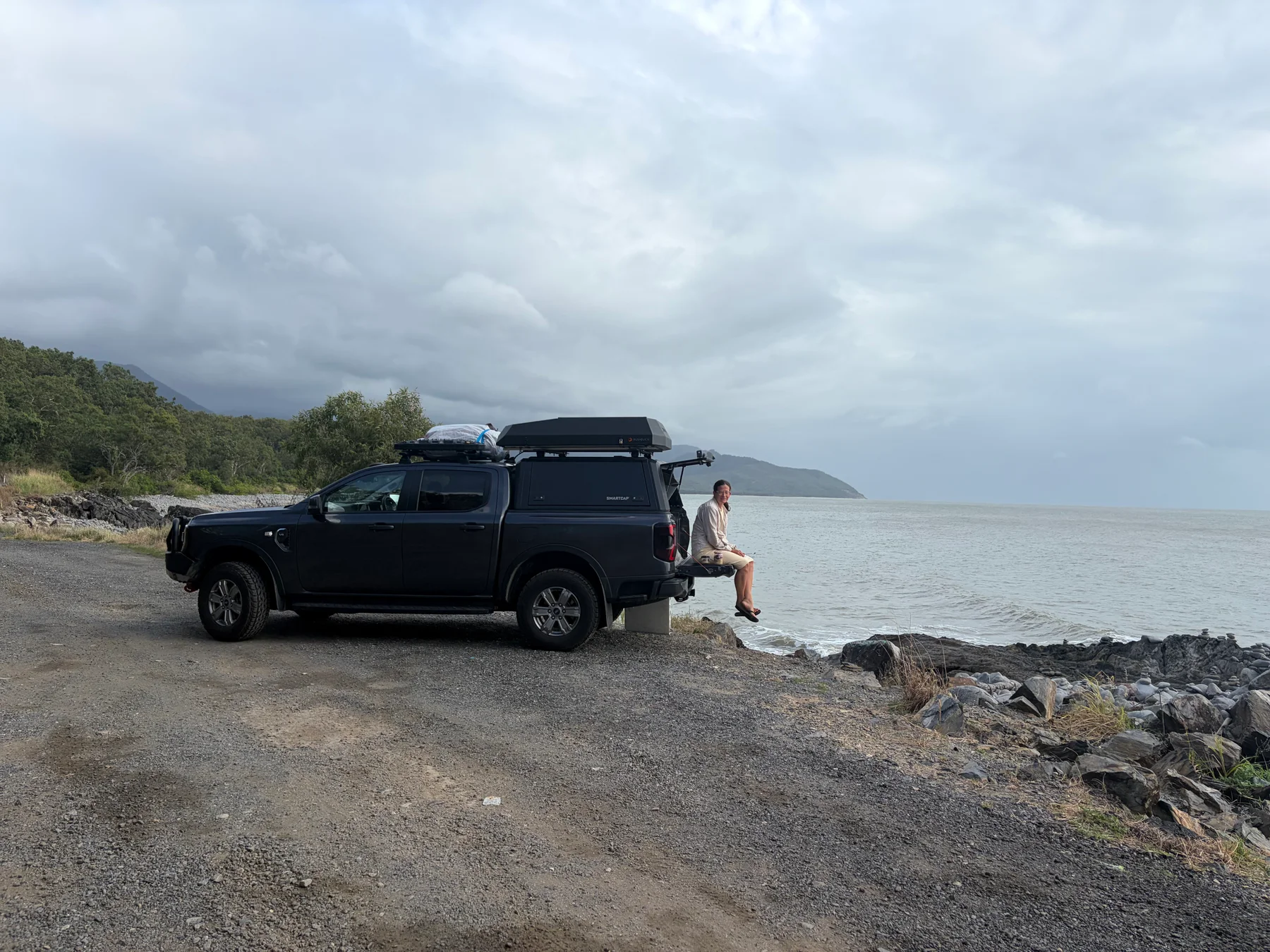
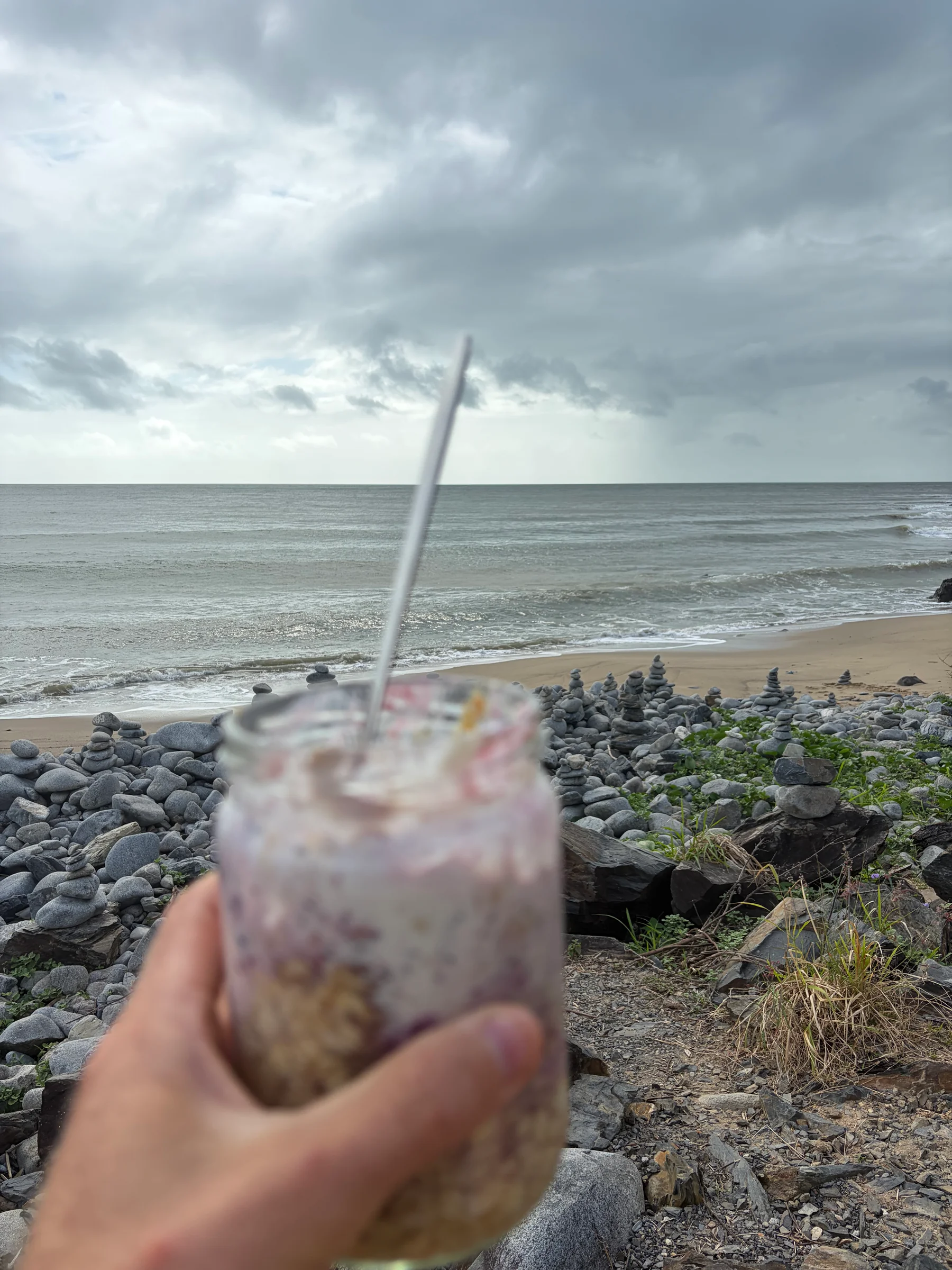
The longer driving days are still not too bad for us. We have a good rhythm now. Change drivers every couple of hours, listen to audiobooks, sometimes sing along in the car, stop before anyone becomes too tired. It is not complicated, but it works.
We stopped in Mossman to stock up, then continued further north towards Cooktown.
Cooktown
Cooktown was the furthest north we had ever been.
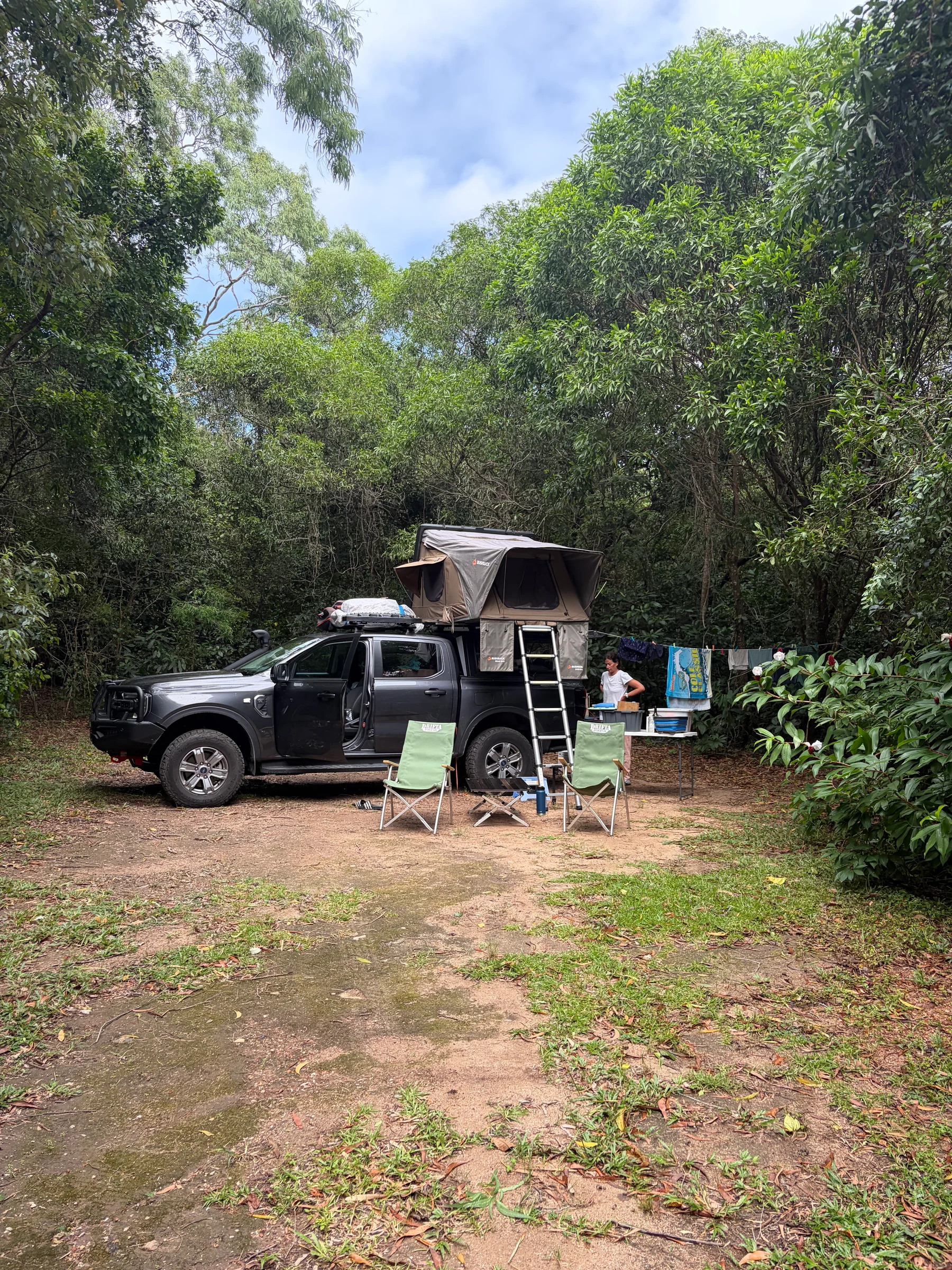
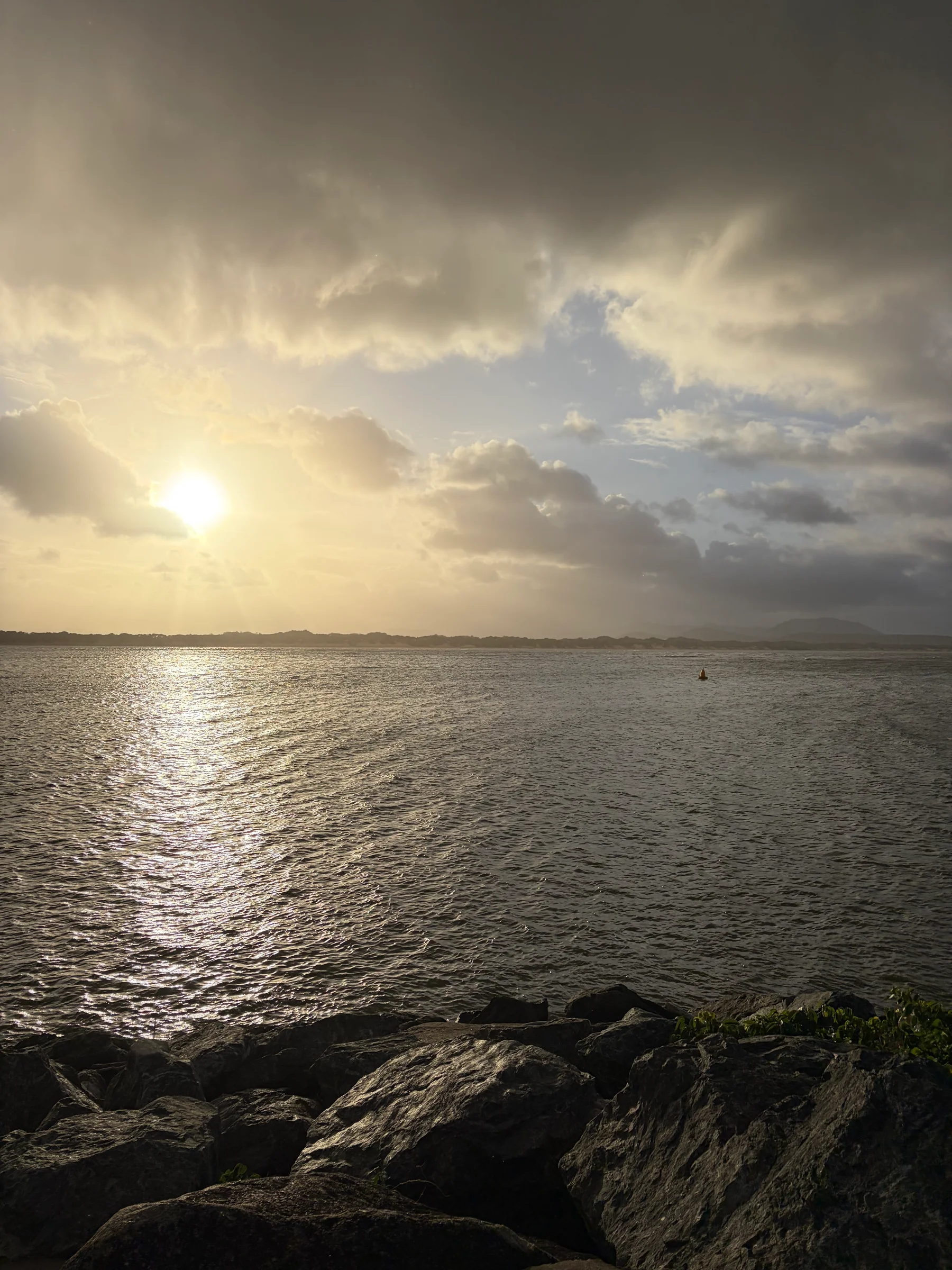
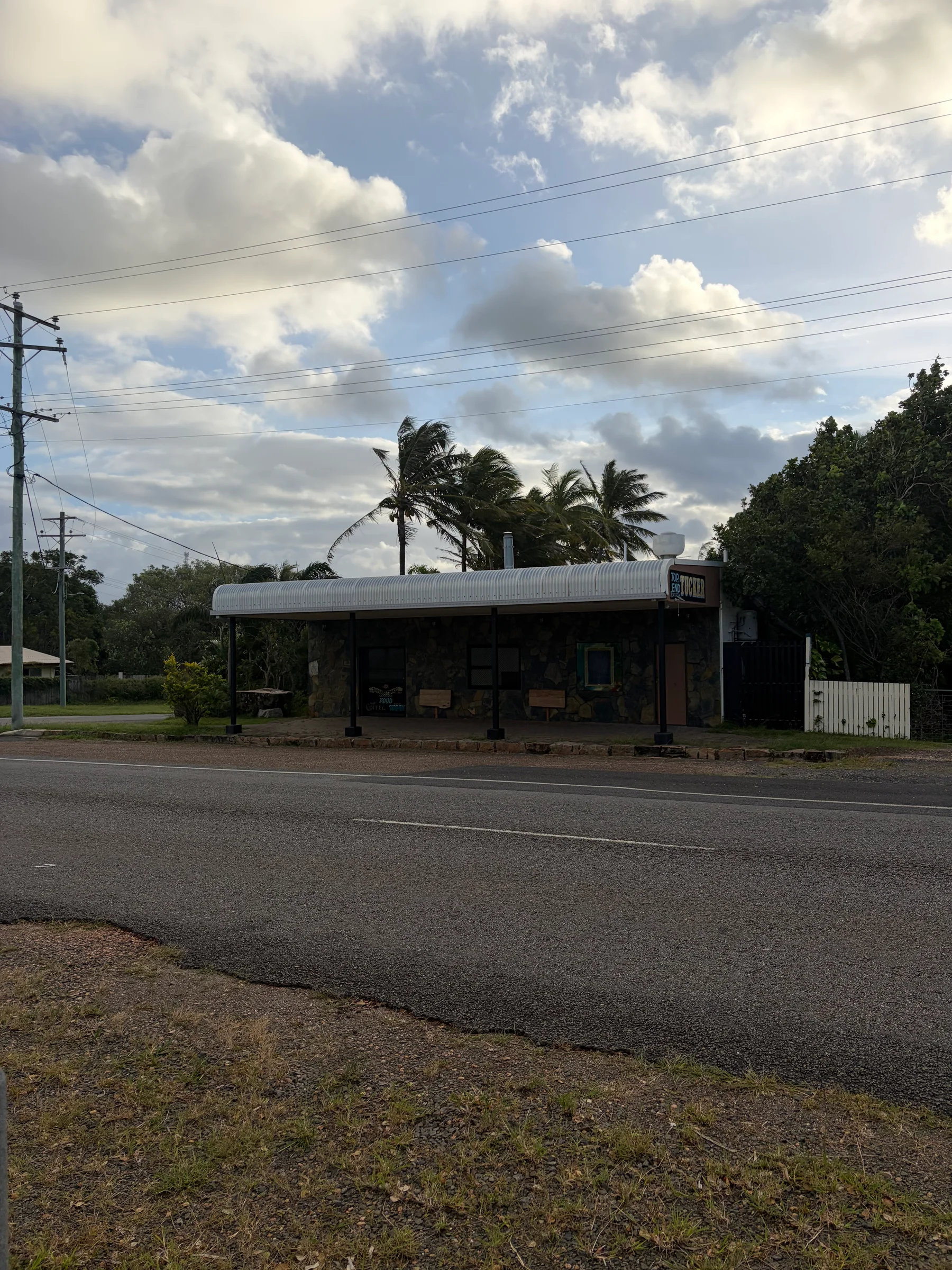
It felt like a quiet, slightly sleepy fishing and tourist town. Not empty, but not busy either. We chose Cooktown Caravan Park partly because it advertised no sandflies. At that point, that was a convincing selling point.
We would stay there again.
The unpowered sites were tucked away enough that it almost felt like a bush camp. We did not really see our neighbours from where we were, which was ideal. The weather had the rainforest pattern again: windy in the open, light rain every now and then, but our site was very protected.
I went for an afternoon run, which was a good way to see a little of town and move after the drive.
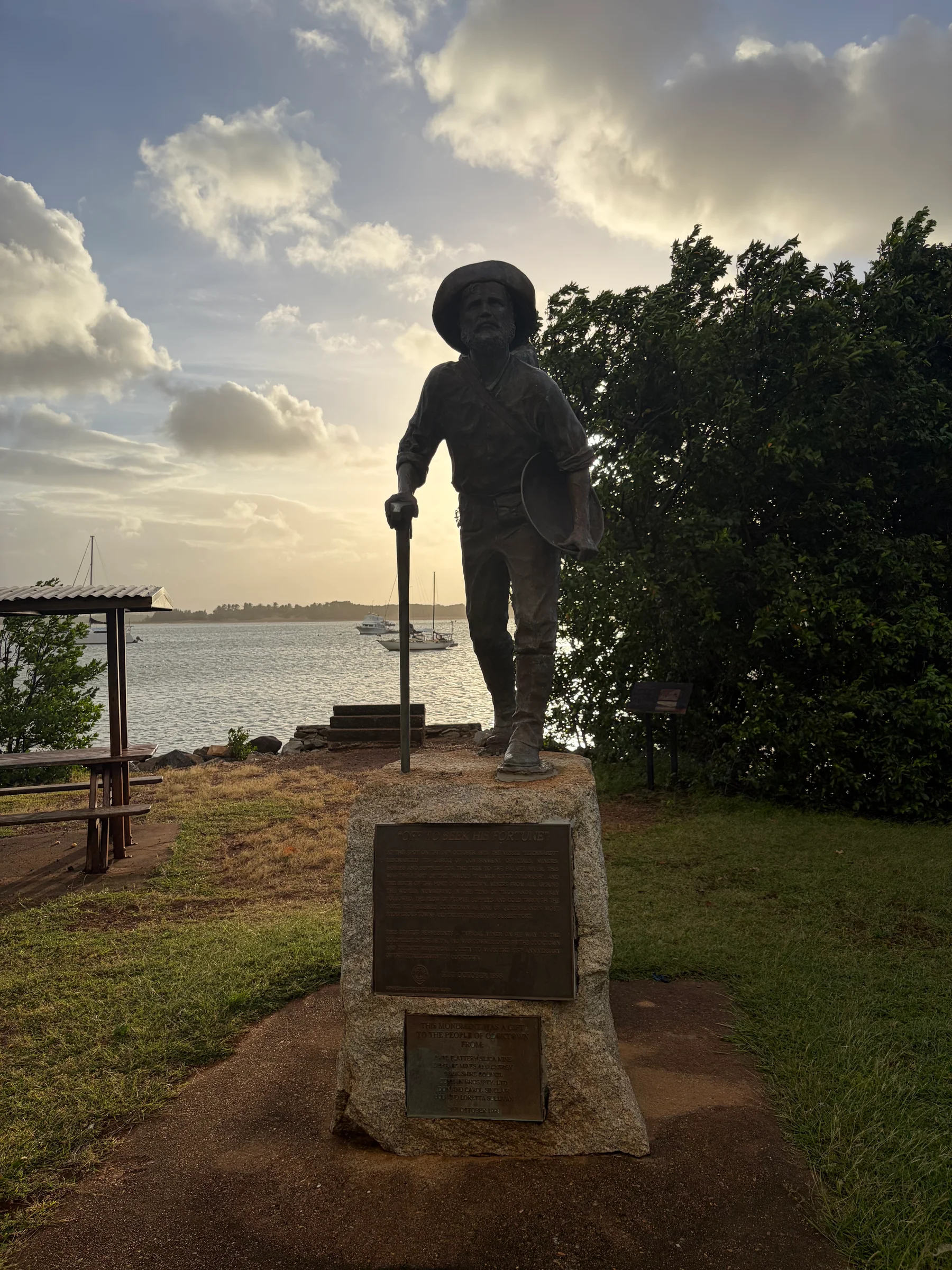
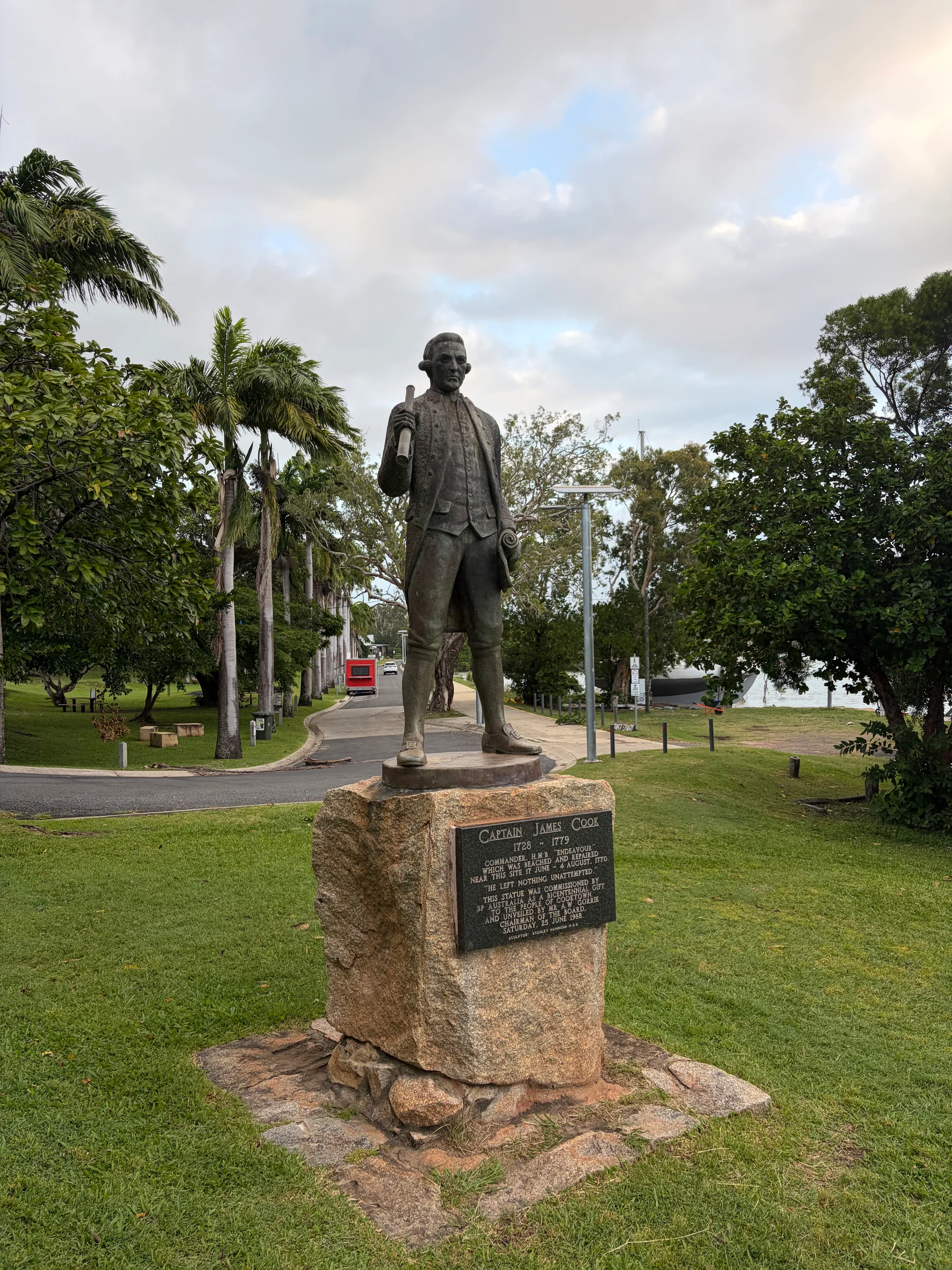
Cooktown is strongly tied to James Cook and the Endeavour, which was repaired on the Endeavour River in 1770 after being damaged on the reef. The European history is very visible in the name and local tourism material. At the same time, it is Guugu Yimithirr country, and the place clearly has a much longer history than the Cook story. We only scratched the surface during our short stay.
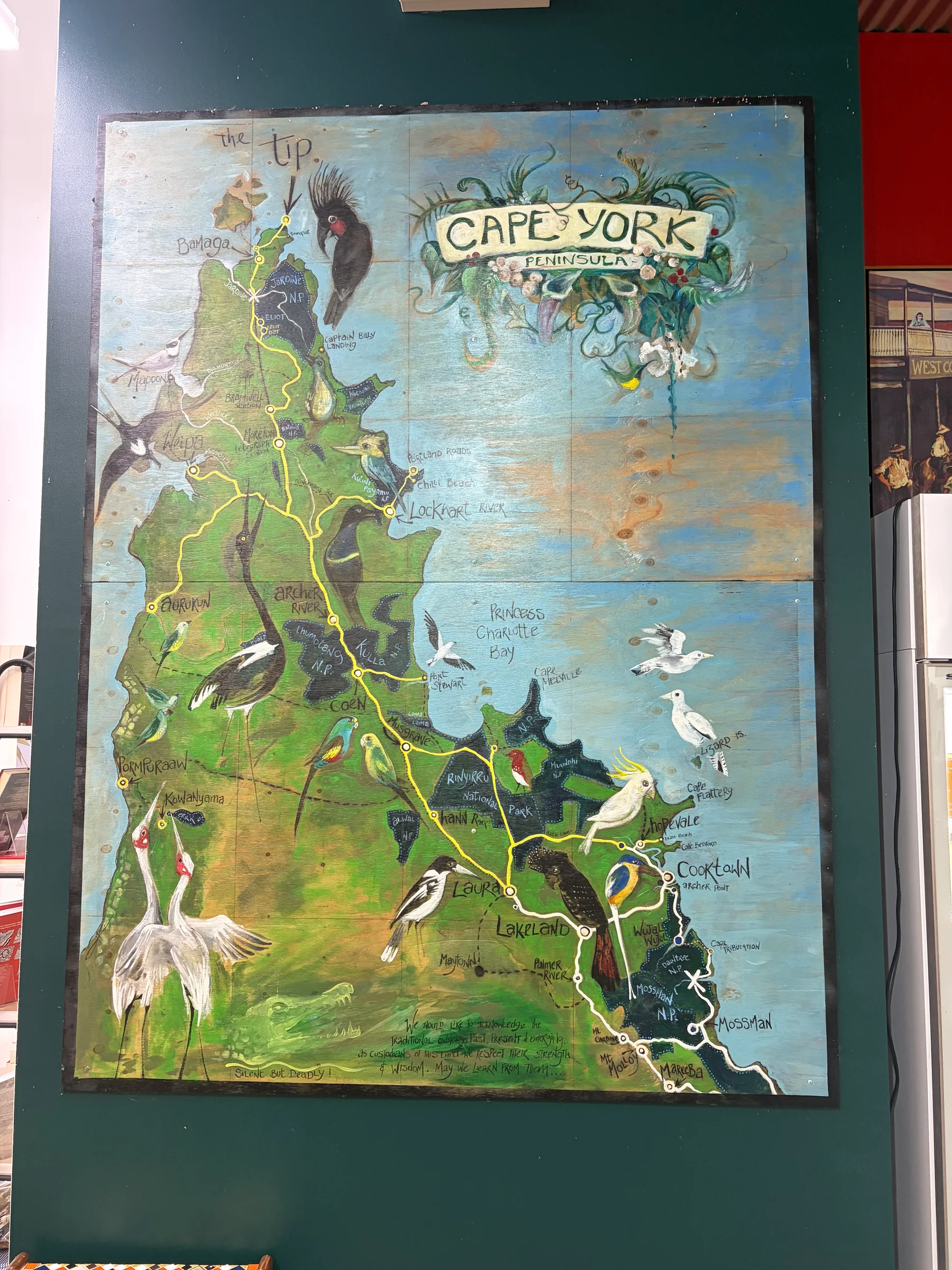
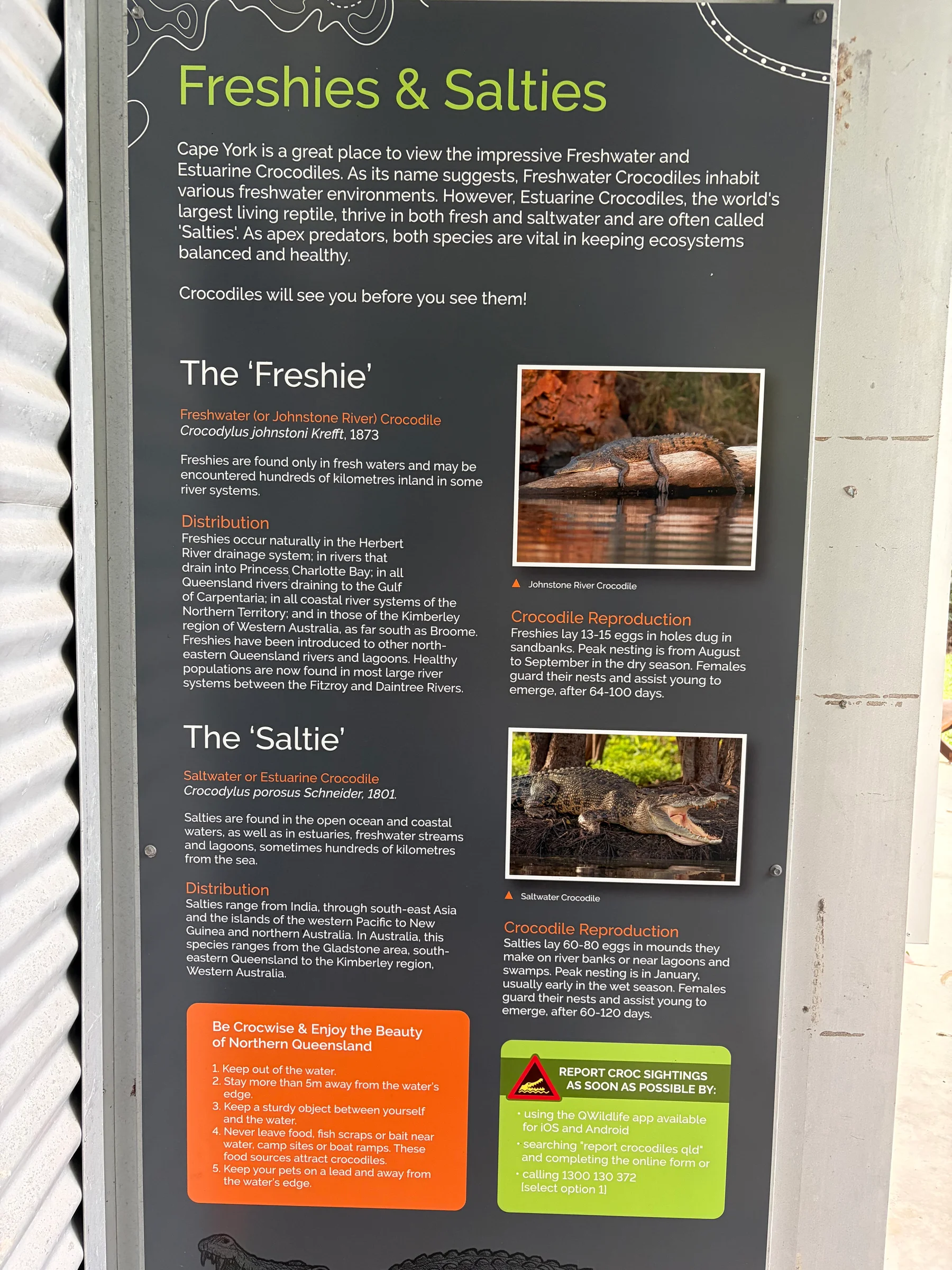
Mostly, Cooktown was a pause.
Not a reset like Noosa with an apartment and restaurants, but a quieter stop before the next section. We knew the Cape York part was coming. Roads, red dirt, corrugations, unknown conditions and more remote camping. Cooktown was still easy. Shops, caravan park, RSL, coffee, phone reception, normal decisions.
A Quiet Cooktown Day
We stayed the next day in Cooktown and kept it simple.
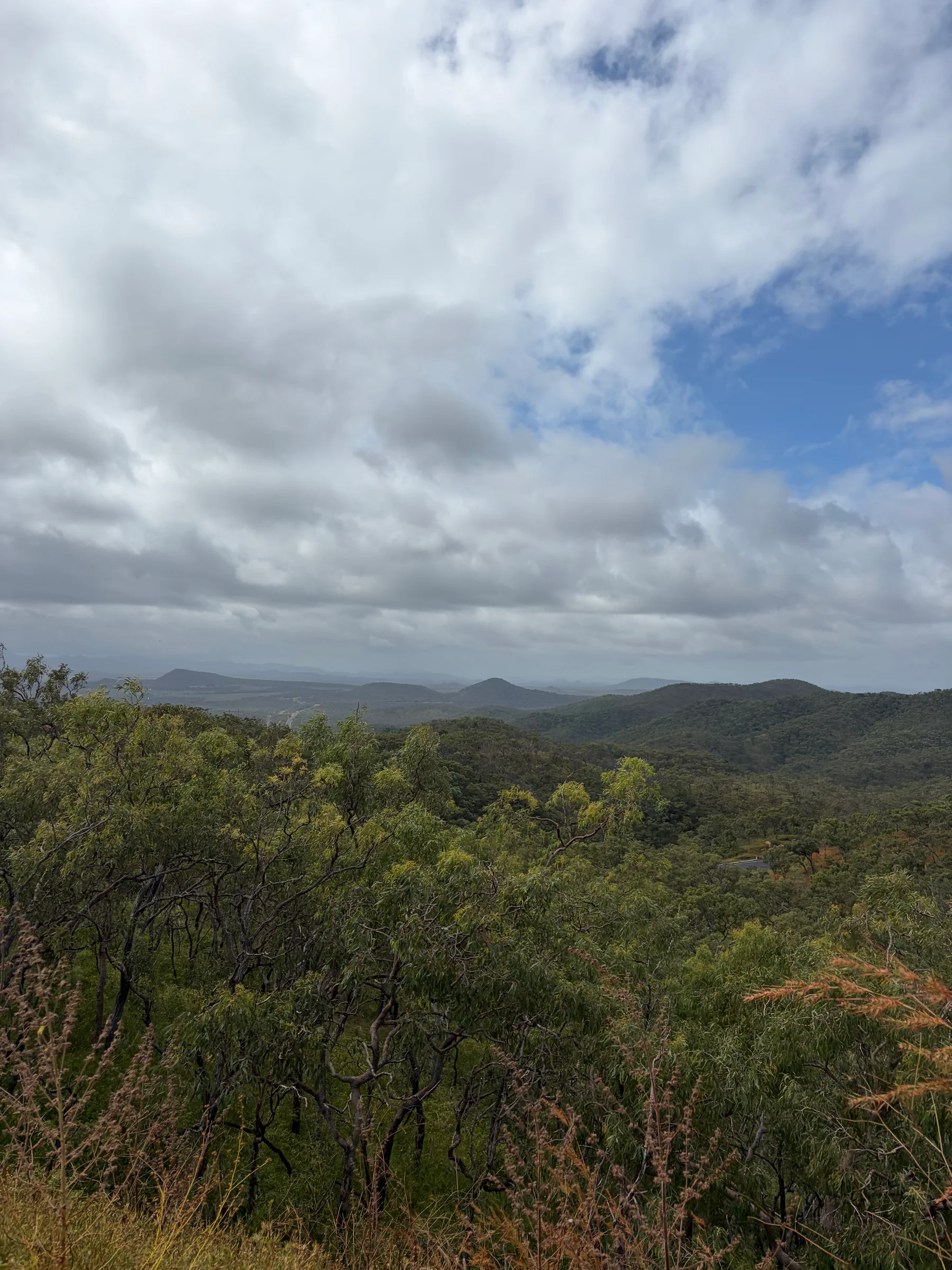
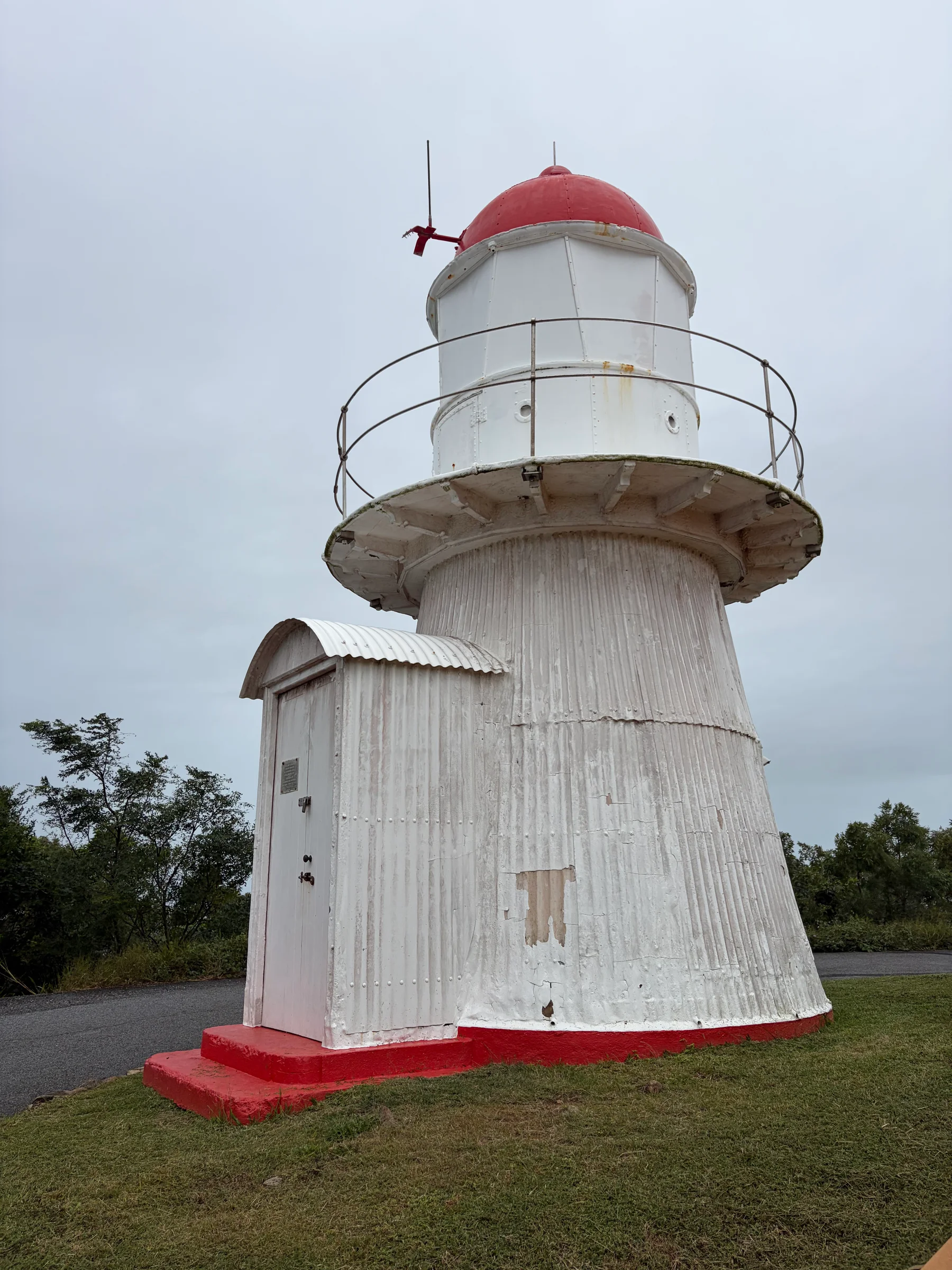
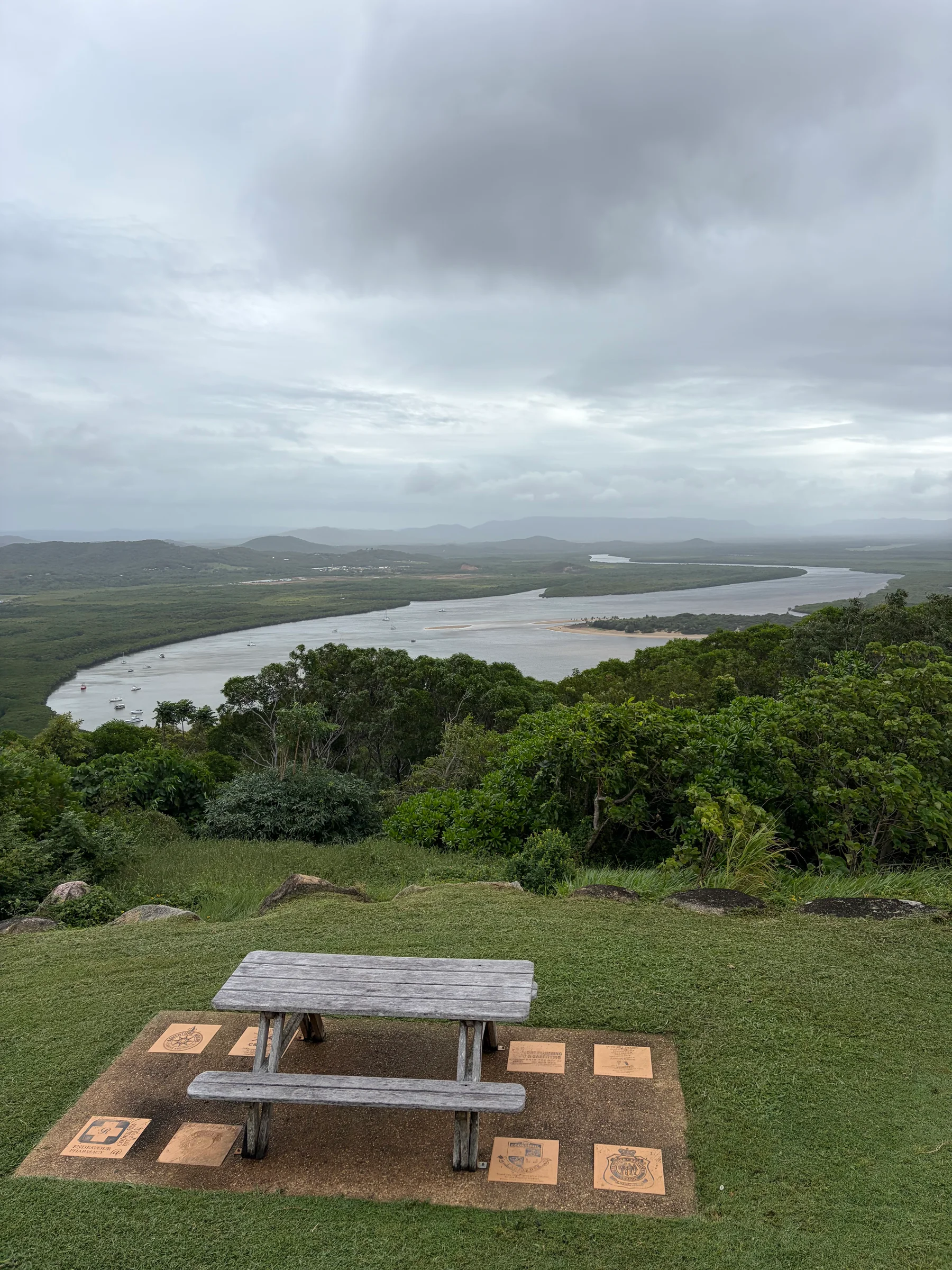
In the afternoon we drove up to the lookout on the hill. The view was very good. You can see the river, the town, the coast and the hills around it. It also makes Cooktown easier to understand on the map. Water, rainforest and road all meet there.
After the lookout we had a beer at the local RSL.
Up there we did not need to sign in, which was different from some of the clubs further south. It was too early for the kitchen, so we did not eat there and cooked later at camp instead.
We had considered the museum, but the entry was around $25 and we only would have had about 30 minutes before closing. That did not feel worth it. I would rather go properly another time than rush through because we had technically paid.
Back at the campsite there was a big group around the camp kitchen, all mountain bikers. We were surprised by how many trails there seemed to be around Cooktown. It is not the first thing I had associated with the place, but apparently it is a proper activity there.
The rest of the day was relaxed. Some planning, some camp time, some normal food, and some checking of the next route.
That was probably the useful part of Cooktown for us. It gave us one more normal day before the road changed. We were still not fully sure what to expect from the conditions further north. We had read a lot, watched a few things, and heard different opinions, which is often how 4WD route research works. Everyone has advice, and much of it depends on vehicle, timing, weather and personal risk tolerance.
So Cooktown became the last comfortable place before the question marks.
The next morning we would leave town, and the first real Cape York driving section would begin. For now, we had a protected campsite, light rainforest rain, and enough time to sit still for one more evening.