Highlights
Best moments
- Spending time with friends.
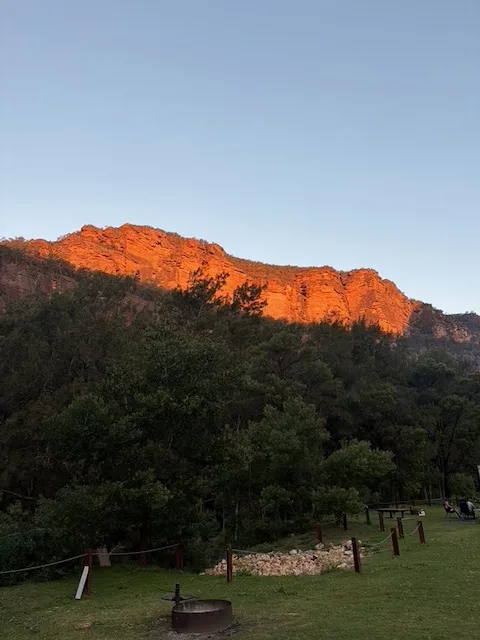
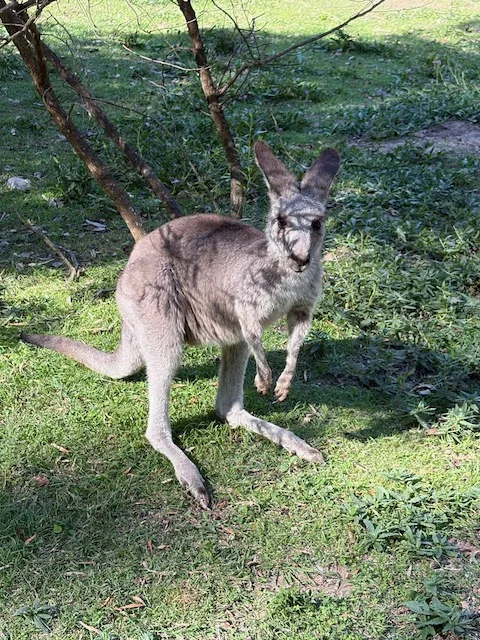
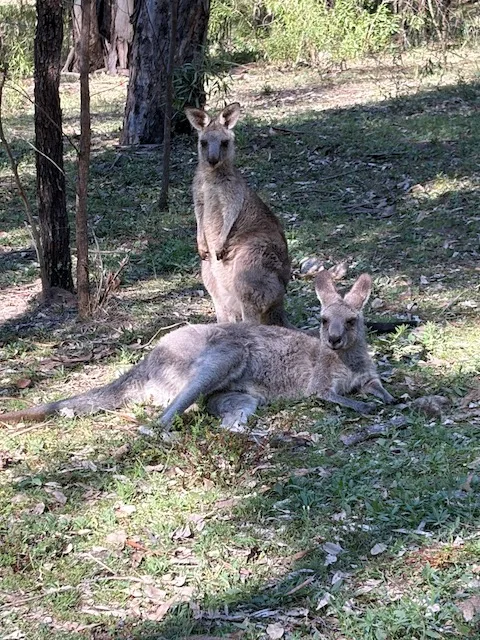
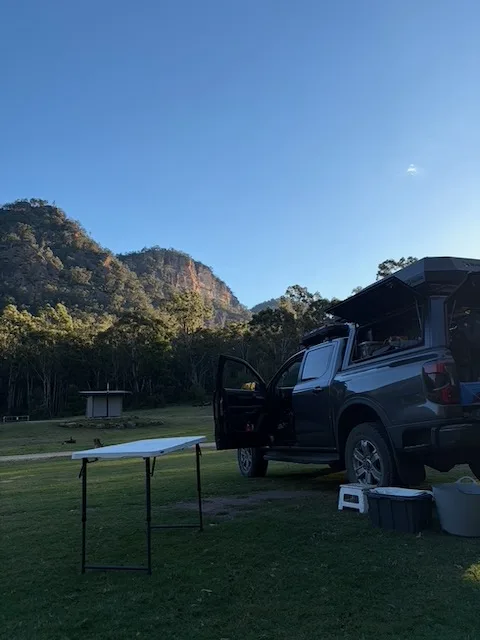
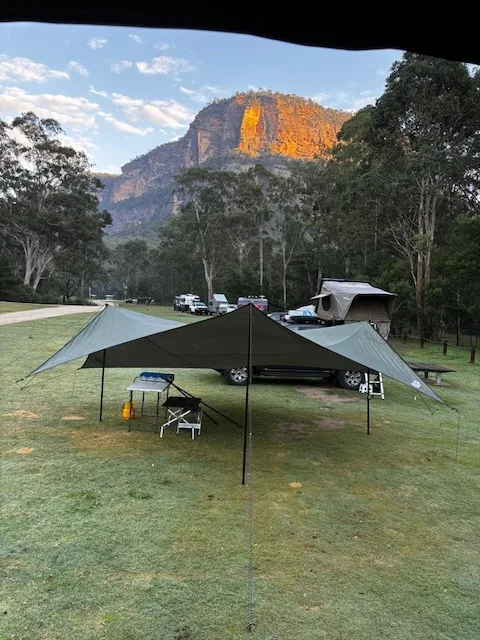
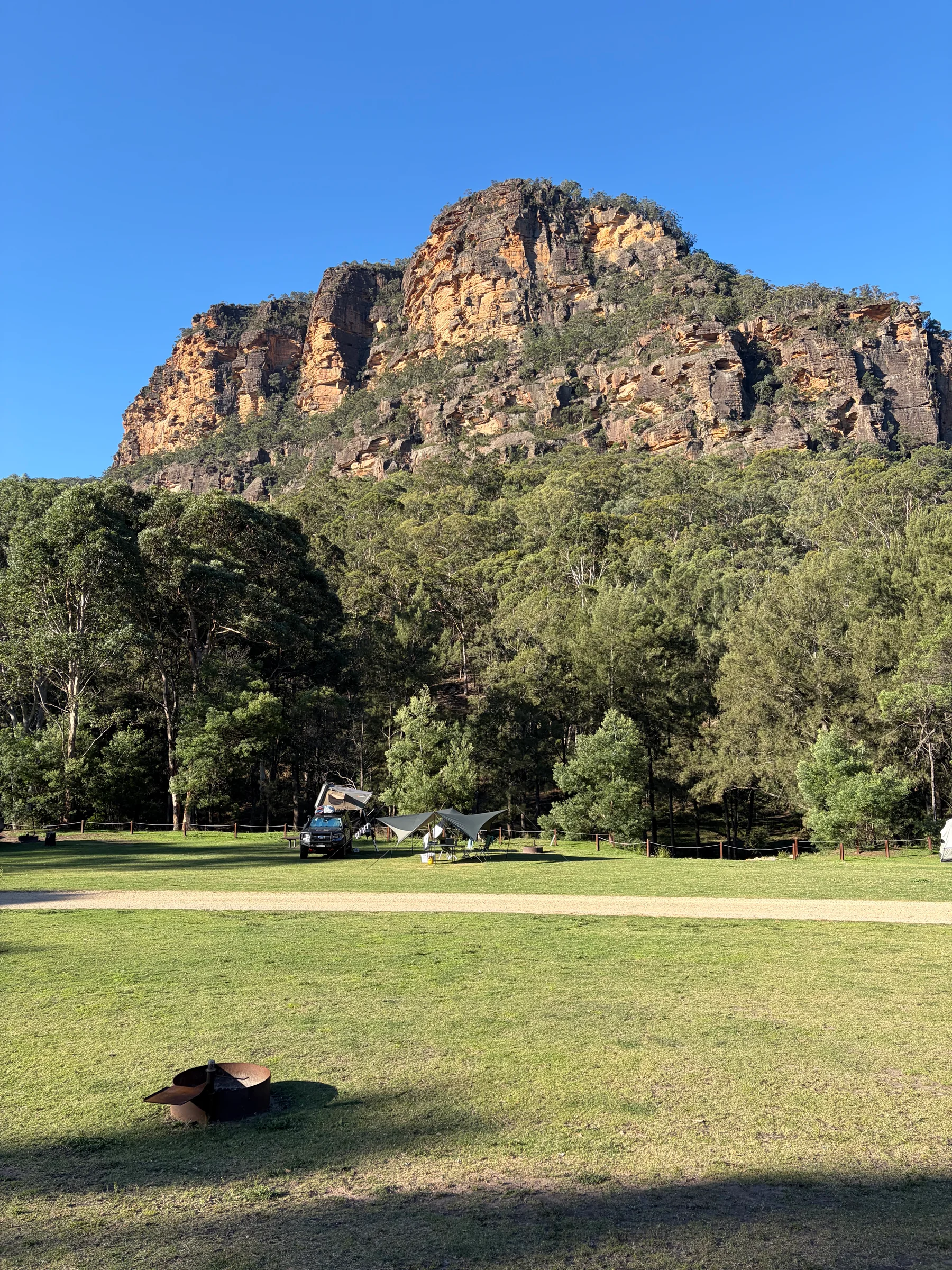
- The late afternoon drive into Coorongooba, with kangaroos becoming active and the sandstone walls glowing around camp.
- The sunset walk at Pilliga Pottery, even though we were fairly sure for a while that we would miss the sunset completely.
Failures
- Assuming the big supermarkets in Mudgee would be open on Easter Sunday.
- Planning one of the best walks in NSW and then finding every walking track in the park closed because of a bushfire.
Notes from the road
- The induction cooktop is becoming more useful than expected.
- Diesel at $2.90 per litre changes the way you think about detours.
- A campground without mosquitoes feels great.
The moon at Coorongooba was so bright that we almost did not need a torch.
That was not the detail I expected to remember from our first proper stop off the coast. We had arrived late in the afternoon after a long driving day, and the light on the sandstone walls around Glen Davis was jaw dropping. The campground was full of kangaroos, the air was dry, and after the mosquitoes at Killalea, the absence of biting insects was a serious improvement.
It was only the second section of the trip, but it already felt different. We were no longer just testing the setup close to Sydney. We were starting to move north-ish and inland, with longer drives, bigger distances between stops, more planning around fuel and food, and our first stretch with friends joining us on the road.
Leaving the Coast Properly
The day started back at Killalea. Before driving inland, we refilled the water tank and went one more time to Port Kembla Pool.
A few days earlier the pool had been bloody cold, and the shower afterwards was unnecessarily cold as well. This time it was a completely different experience. The water was fresh but not freezing, the shower was warm, and my standard 1km swim felt like a good reset before spending most of the day in the car.
From there we went to ARB in Wollongong to have Roger’s new suspension checked after the first 500 kilometres. Initially we thought we would need to go back to Brookvale for that. Steph pointed out that an ARB shop is still an ARB shop, even if it is not our local one. Correct.
While Roger was checked, we had breakfast nearby. Then we finally started the drive inland. More than four hours in the car also meant we could continue the latest Robert Langdon audiobook. Listening to audiobooks has become a good driving-day routine. It keeps your mind just busy enough.
Somewhere around Penrith we filled up with diesel for the first time on the trip. Since the outbreak of the Middle East war, fuel price and availability had been one of the things sitting in the back of my mind. At the pump, the worry became real. The diesel still in the tank had been around $1.90 per litre. The new diesel was $2.90 per litre and prices kept rising.
Petrol Spy helps us find the cheapest option nearby, which felt like a win, but it was still a very clear message. Longer stays. Fewer unnecessary detours. Drive with purpose.
We stopped in Blackheath hoping for excellent sourdough and got fairly average bread with yeast. Better than nothing. Then we did the usual Lithgow grocery stop, including the specific toilet stop we somehow always use when passing through - we love the musical toilet. We bought gas and food for four people, because we were looking forward to our friends Becky and Craig joining us soon.
Coorongooba and the Canyon
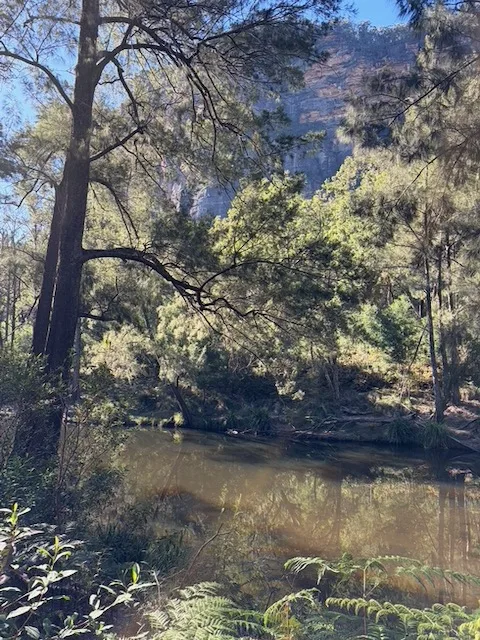
Coorongooba campground sits near Glen Davis in Wollemi National Park, beside the Capertee River. It is a simple campground with toilets, unpowered and unmarked sites, picnic tables and barbecue facilities, which usually means the place still feels like a real campground rather than a holiday park.
The drive in through the Capertee Valley is spectacular. The valley is often described as one of the widest enclosed sandstone valleys in the world. I do not know how important the ranking is, but from the road it feels huge. The cliffs, the rock formations and the slow turn into Glen Davis make it a good arrival drive.
By the time we came through, it was around 4 or 5pm and the kangaroos were becoming active. We saw a few close to the road, so we drove carefully. When we reached camp, there were many more kangaroos. The sunset on the sandstone was beautiful, and we were also very happy to notice that there were no mozzies.
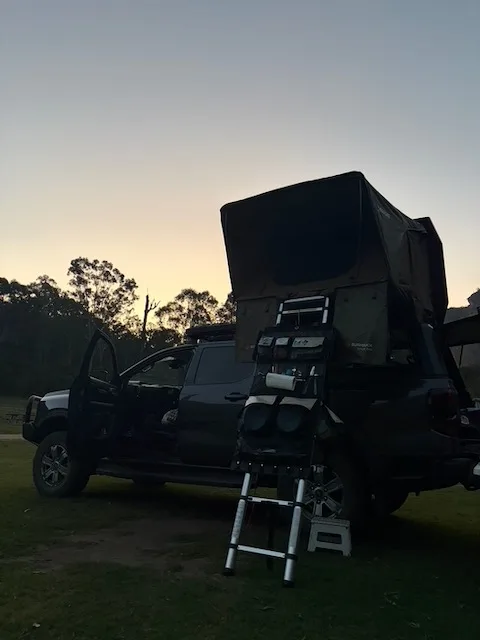
Dinner was leftovers. Before that we had a pre-snack of Shapes, and there is only one real flavour, Pizza Shapes. Instead of a campfire we chose movie night, supported by Starlink. The stars were a bit less sharp because of the moon, but the moon itself was so bright that the whole campground had a soft light over it.
The next morning started slowly. In the canyon the sun did not reach our campsite until around 10am. Overnight humidity had made everything wet outside, even though it had not rained. So we had coffee, breakfast and time for the gear to dry.
We also had a few admin things to do, including paying the car registration. Being on the road does not mean these things disappear.
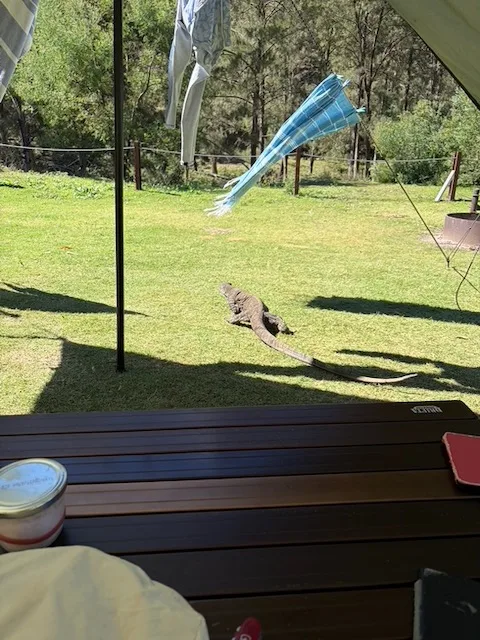
The shock of the morning came when a goanna came very close licking Steph’s toes. It was more curious than dangerous, but it still gave us both a proper fright. I prefer wildlife encounters with a little more distance.
My ankle was still not ready for running, so I went for a walk instead. Steph ran, including the steep hills around the campground, which was impressive.
We also talked about maybe stopping somewhere in the Himalayas on the way back to Australia after our Europe stint. If that ever becomes a real plan, keeping a bit of fitness will not hurt.
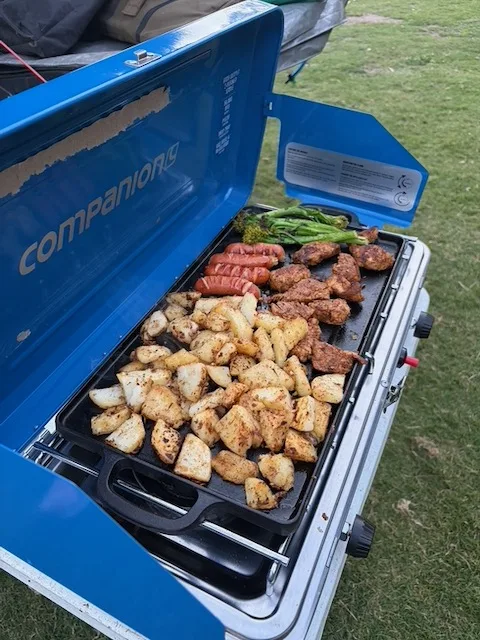
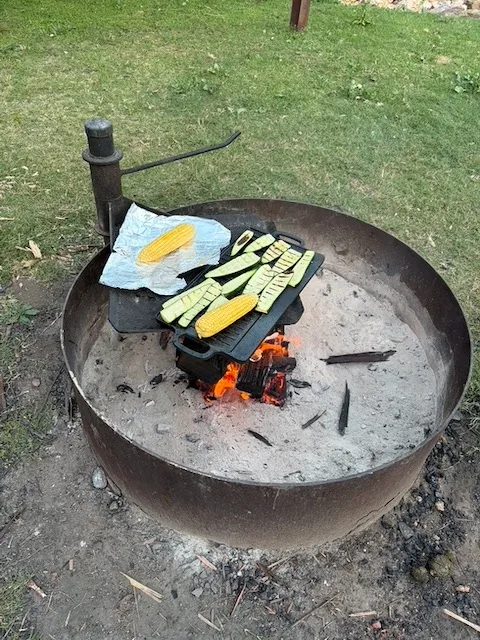
That evening we had our first proper campfire and cooked over it: steak for me, sausages for Steph, corn and vegetables. It was simple and very good.
Becky and Craig arrived around 10pm. That is already late for us now, but we still stayed up, greeted our friends and chatted around the campfire until about 11:30pm. It was great to see them, and we were looking forward to spending a few days together.
Towards Mudgee with Friends
The next morning started with a feast. Before the food, though, Craig handed me my new toy: a DJI Neo 2 drone.
I had ordered it last minute in Freshwater. Because of a delivery delay, the parcel did not reach us before we left, so I redirected it to Becky and Craig. A few days later, there it was. Unpacking it felt a bit like Christmas, except I had paid for the present myself.
We charged it and went for a short walk away from the campground so we would not annoy everyone. The drone was easier to handle than expected, and we got a few good shots. Then the girls were hungry, which was fair. We went back and had a big camping breakfast with bacon, eggs and avocado.
Once everyone was fed and the equipment had dried, we drove towards Mudgee - via the scenic route.
Mudgee is one of the older wine regions in NSW, with vineyards going back to the 1850s. It is still well known for red varieties like Shiraz and Cabernet Sauvignon, but the region also grows quite a few Italian and alternative varieties now. That probably explains why we keep returning. There is enough variety to make it interesting without the place feeling too polished.
Our first stop was First Ridge. We have been there a few times, and I still like the Fiano. Steph and Becky did a tasting while I was the designated driver. From there we stopped at Burrundulla Wines, just outside town. Burrundulla is one of the older names in the area, with a historic homestead connected to one of Mudgee’s early settler families. The cafe there, Our Chow, had a relaxed Italian touch and the food was quite nice.
The tasting itself was okay. We usually prefer tastings where you learn a bit more and the host is interested in the conversation. Wine is more enjoyable when someone can explain what is happening in the glass, not only pour it.
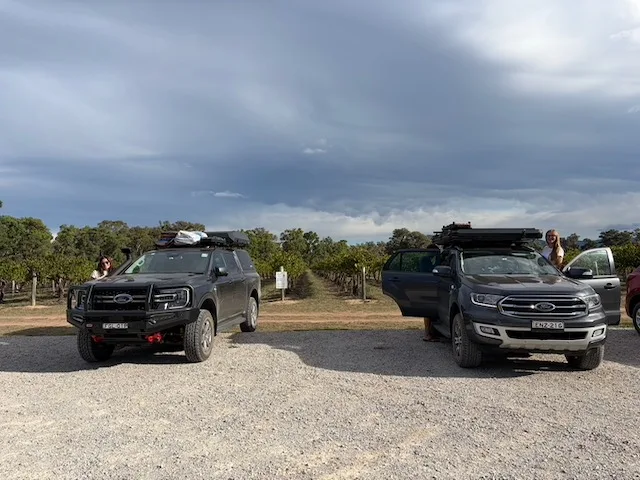
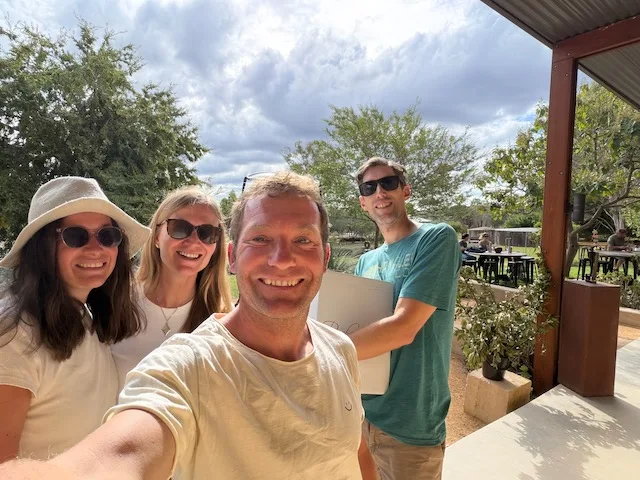
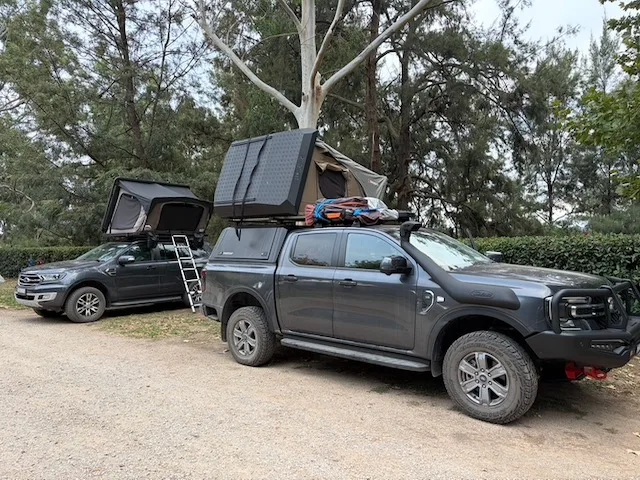
In Mudgee we stayed at Riverside Caravan Park on unpowered sites. They were very, very small. It felt like being squeezed between the park pathway and the driveway. Not recommended. Next time I would either book a powered site or go back to the Showground, which worked better for us the year before.
Dinner was a freestyle chicken curry. Delicious, and another point in favour of travelling with too many spices.
Parkrun, Wineries and Wrong Beers
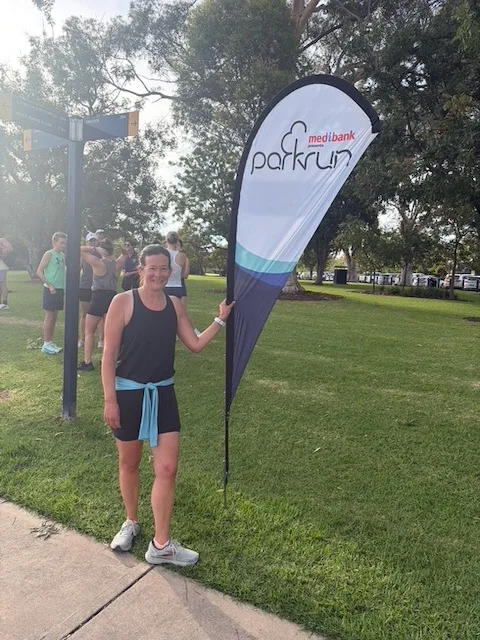
Saturday started with Mudgee parkrun for Steph. Parkrun is a free, timed five kilometre community run held on Saturday mornings in many places around Australia and the world. It is a simple concept and a good one. You turn up, run or walk, get scanned, and for half an hour you become part of the local routine.
I also did an easy five kilometre run to test the ankle. It was okay. Still not great, but it could have been worse. At this stage that counts as progress.
After the morning exercise we had breakfast and relaxed at the campsite. Becky and Craig had a lunch booking at Pipeclay, which is a very good restaurant with a beautiful location, but Steph and I opted out this time. We did washing and had a smaller lunch instead.
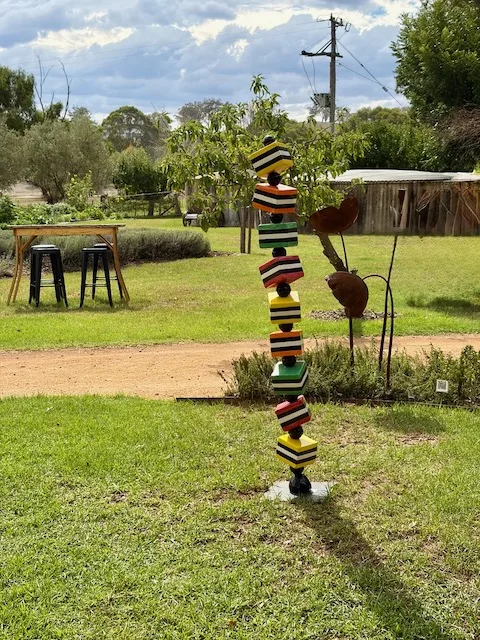
Later we met them at Rosby, one of our favourite Mudgee wineries. It probably has one of the prettiest settings in the area, with sculptures around the property and an artistic feeling that does not feel forced. The wine was delicious. Steph did the driving. I did the drinking. This arrangement worked well for me.
Gerry, the owner, is definitely a character, and we like coming back.
By the time we finished it was already around 3:30pm, but we still wanted to squeeze in one more winery. McIntosh was the newer one for us. When we first visited, it had only opened a year or two earlier and was run by a friendly couple. This time the wines were more expensive than we remembered, but I liked some of the reds. Good balcony wines, which is a valid category.
Back at the campsite we went into town to Three Tails Brewery. In my notes I had called it Tailgate, which was close in feeling but wrong in name. It is a large venue with craft beer, food and live music. The pizza was okay, but I would not order it again. The fried chicken was excellent. Twice the wrong beer was poured, which became part of the evening rather than a serious issue.
The singer was good. Families got up and danced. It felt like a proper Saturday night in a country town.
Easter Sunday Without the Shopping Plan
Sunday was a travel day. The plan was to start with a swim at Mudgee Pool. It is a very good 50 metre pool, and there were only three other people in the water for the morning swim. After that we had breakfast at Alby and Esthers, tucked away in a laneway and very Mudgee in the best way.
Then we discovered that the big supermarkets were closed because it was Easter Sunday.
This was not ideal, because the plan had been to do a proper shop before heading into Warrumbungle National Park. We found one smaller food store open and got most of what we needed, but not the pork shoulder for pulled pork over the fire. We did manage to buy excellent sourdough and croissants, which lightened the mood.
So we drove towards the Warrumbungles without quite all the food we wanted.
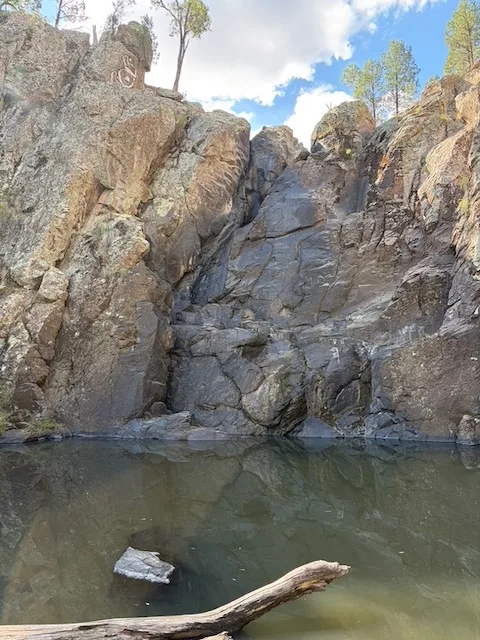
The drive was beautiful and the day was clear. We stopped at Hickeys Falls, where there were no falls because there was not enough water. There was, however, a turtle in the waterhole. I tested the drone again and kept learning. So far the drone had not crashed, which was still the main success criterion.
The Warrumbungles are one of our favourite national parks. The landscape comes from ancient volcanic activity, and the remaining rock formations are sharp and easy to recognise. The Breadknife and Grand High Tops walk is a 14.5 kilometre loop and is often described as one of the best walks in NSW. Steph and I had done it before and were looking forward to doing it again with Becky and Craig.
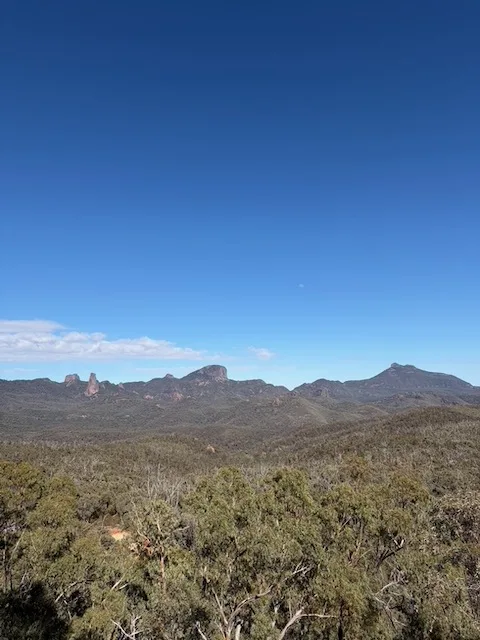
We stayed at Camp Blackman. Sites 17, 30 and 31, or that general area, are definitely worth remembering. We had an early dinner, then drove out for a stargazing session with Donna the Astronomer.
The drive after sunset was around 40 minutes, with plenty of wildlife on the road, especially kangaroos. We were on high alert the whole way.
The stargazing itself was excellent. Warrumbungle National Park is recognised as Australia’s first Dark Sky Park and the first in the southern hemisphere, which makes sense when you stand there under a clear sky. We saw shooting stars and looked through telescopes at stars in more detail. It is still mind-boggling to think that the light you see has travelled for so long that you are looking into the past, not just into the sky.
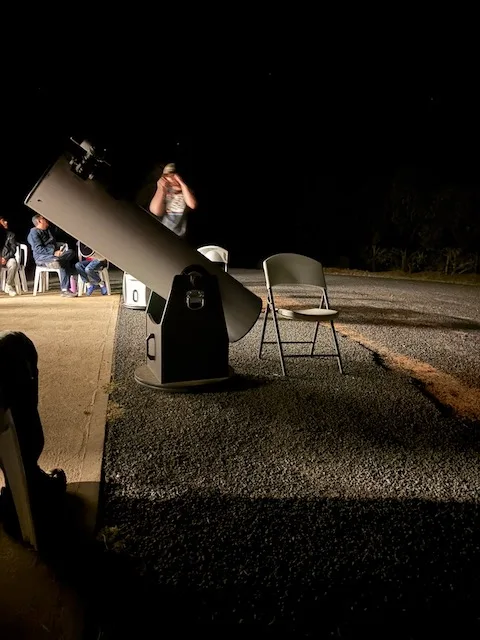
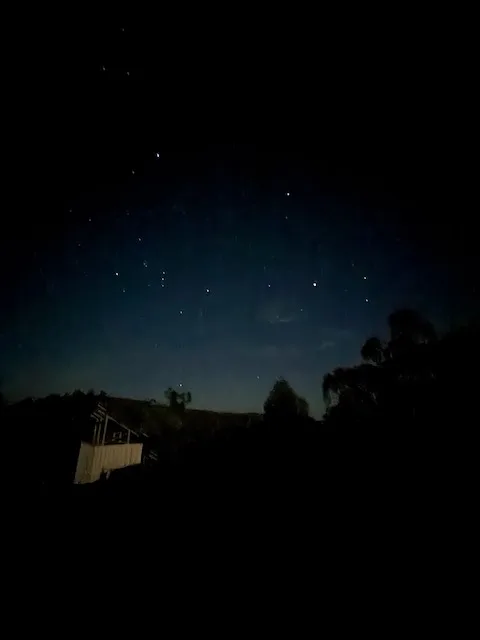
The session was not quite as professional as the one we once did near Broken Hill, but it was still a very good night. No clouds, clear sky, and the moon only started to rise about an hour into the event.
Closed Tracks and a Better Backup Plan
Monday was supposed to be the big walk. The plan was Breadknife and Grand High Tops, one of the best hikes Steph and I have done in NSW.
Unfortunately, all walking tracks in the park were closed because of fire.
We walked up to the visitor centre to get more information. They told us that a camper who had not registered had lit a fire on Saturday night and caused a widespread bushfire. Firefighters had needed helicopters and large trucks bringing water from elsewhere to get it under control.
It is hard to have much patience for that. One person’s selfish decision closed the park’s walking tracks over Easter and ruined the plans of many people. More importantly, it put firefighters, wildlife and the park itself under pressure.
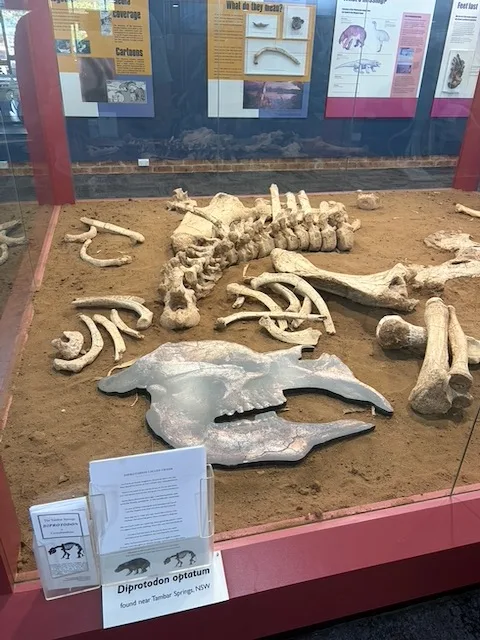
With the walk cancelled, we drove into Coonabarabran instead and visited the museum at the visitor centre. It was actually quite nice, with information about megafauna and the area’s natural history. Then we had a picnic in the park, found the missing pork shoulder in town and headed back to camp.
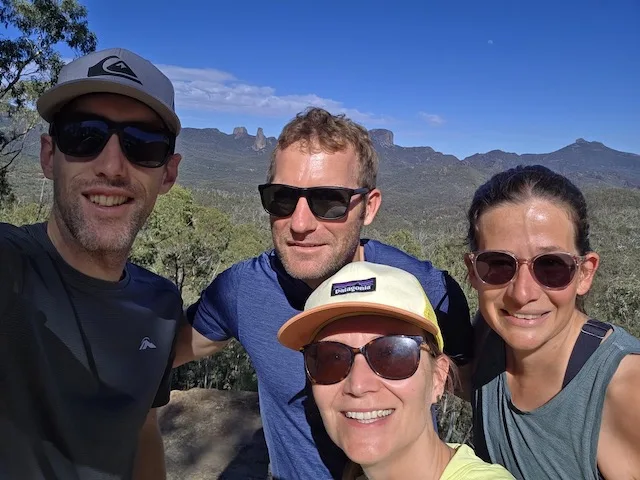
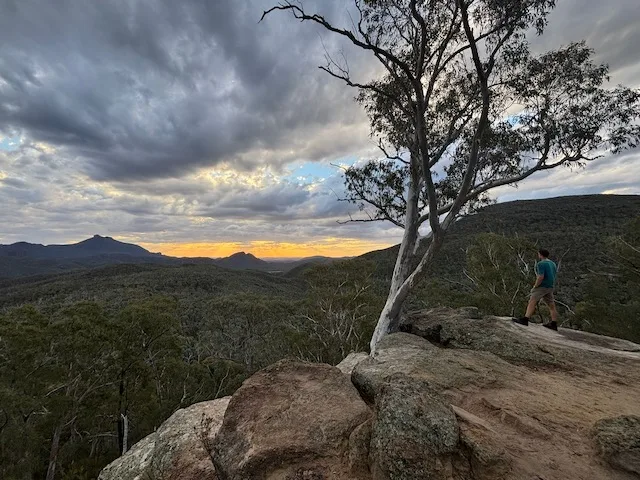
That evening was difficult to improve. Good food, good wine, good company, comfortable temperature, no mozzies and a proper fire. Becky and Craig enjoyed the sunset while Steph and I prepared dinner. We also found a big axe that day, which we adopted into the family.
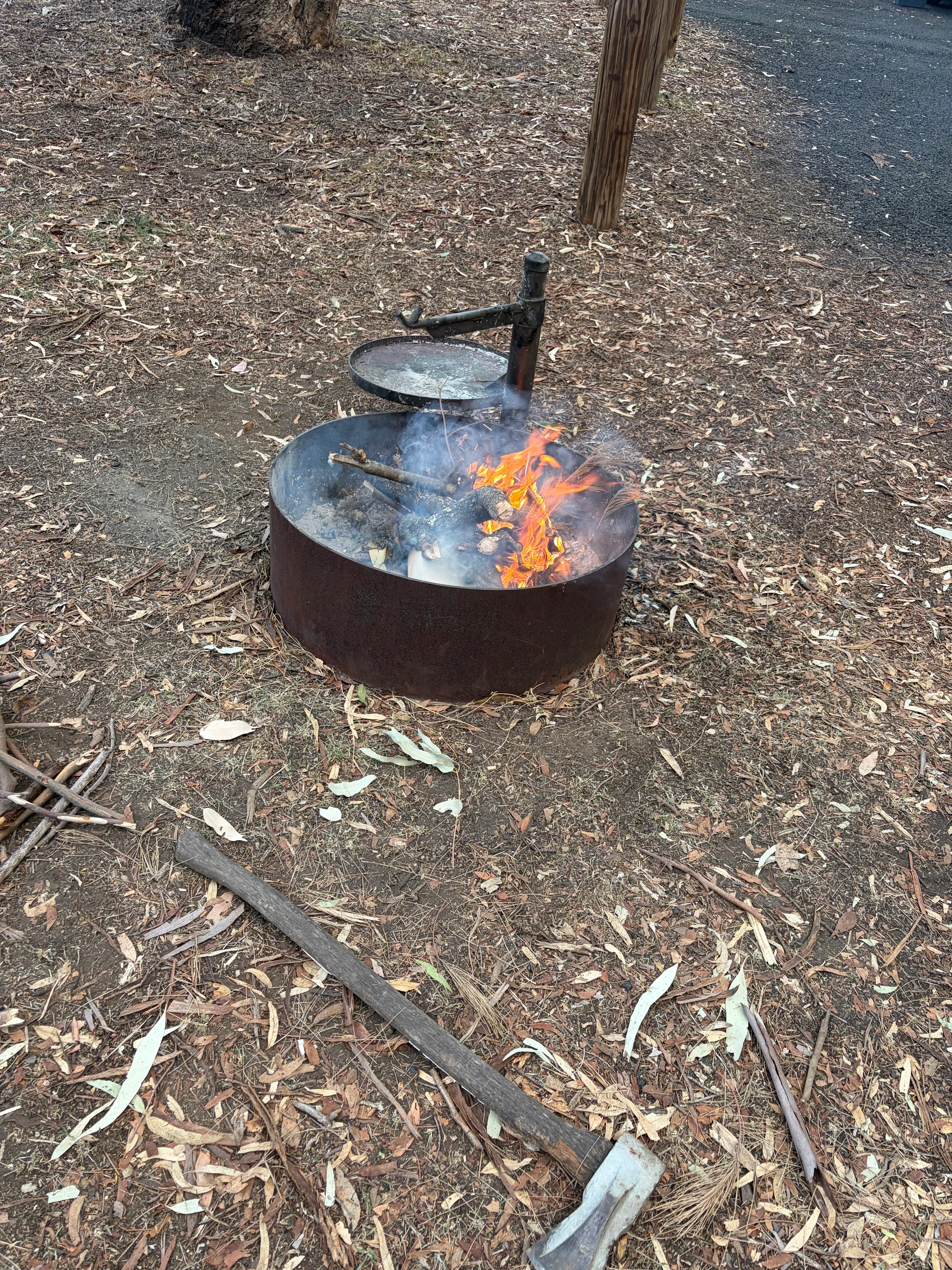
The pulled pork over the fire worked well. It was exactly the kind of meal we had been hoping for when we did the Easter Sunday shop, just one day later than planned.
Pilliga Pottery
Because the tracks were still closed, we changed plans again the next day. We had received a recommendation for Pilliga Pottery, run by a German family in the middle of nowhere, so we decided to check it out.
Pilliga Pottery sits on Barkala Farm near Coonabarabran, at the end of a dirt road. It was established in 1985 by Maria and Richard Rickert, who moved there with their young family. Today it is part pottery, part cafe, part creative farmstay and part campground. It is an unusual place, and we liked it immediately.
The property is huge, with two large camping areas. We stayed at Kellie’s Camp, which we can recommend. For lunch we had German bratwurst with Bratkartoffeln and sauerkraut. It was quite tasty, and the hosts were very friendly. After weeks of camp cooking, it was funny how specific and familiar that meal felt.
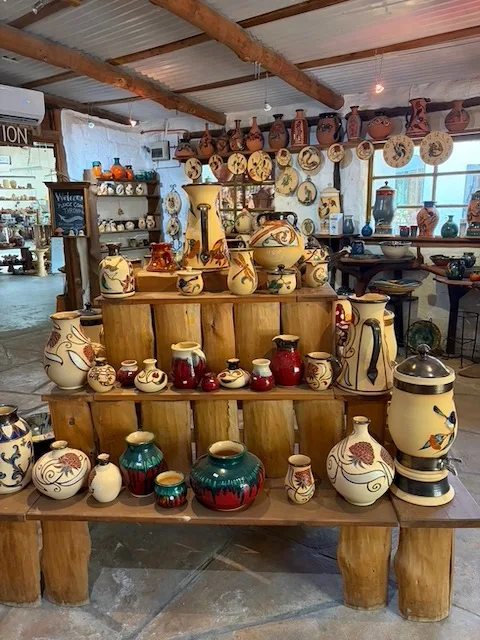
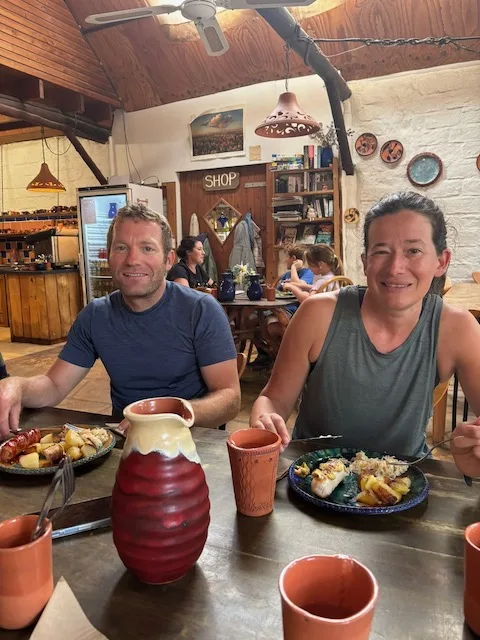
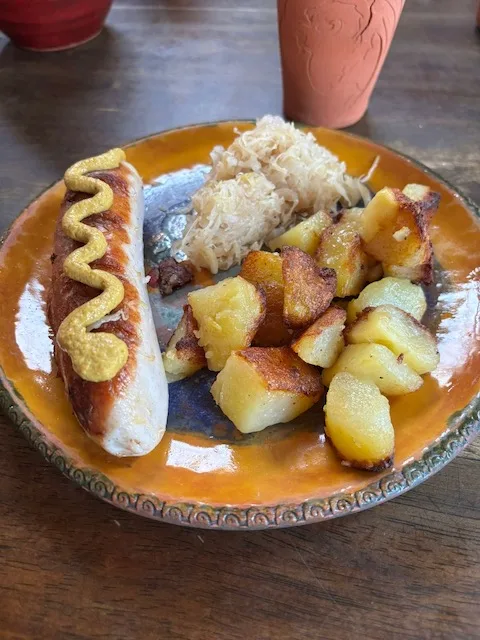
The day was hot. Craig and I tested the drone again, then did a jungle gym session. Later we decided to go for a walk to see the sunset.
First there was a small and unexpected 4WD adventure, with goats, kangaroos and cows along the way. The drive took longer than expected. Then the walk to the sunset viewpoint also took longer than expected. For a while we all thought we were going to miss sunset.
We did not. The viewpoint on the Maria Walk was excellent and a perfect place for a sundowner. It was absolutely worth the effort.
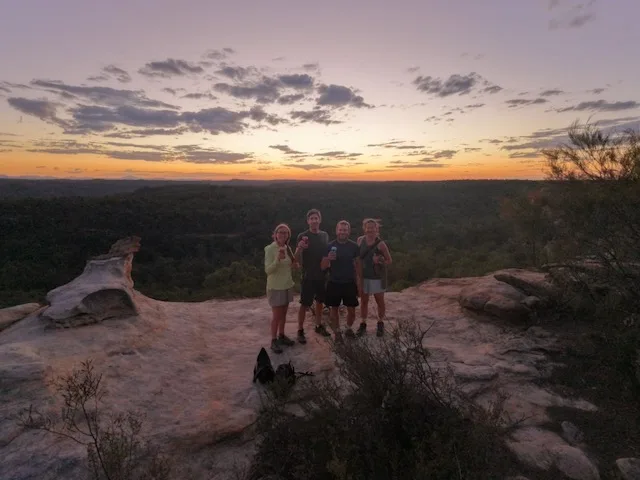
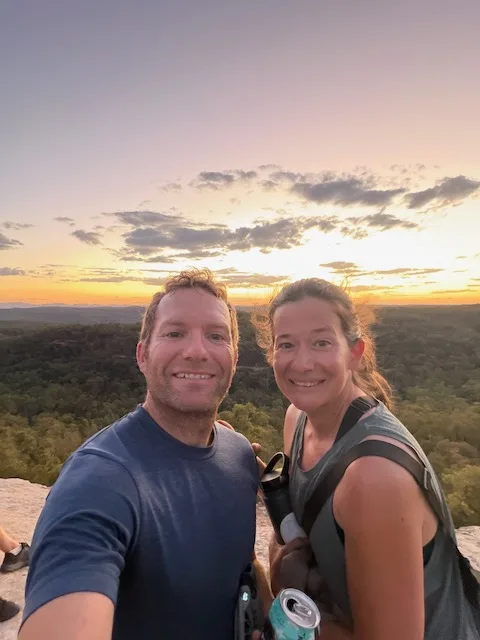
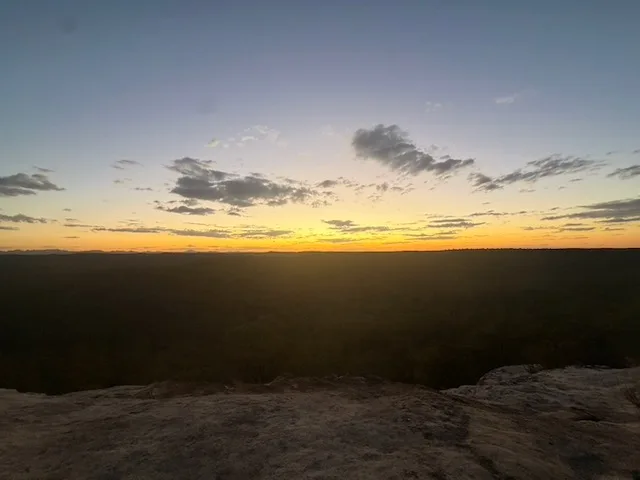
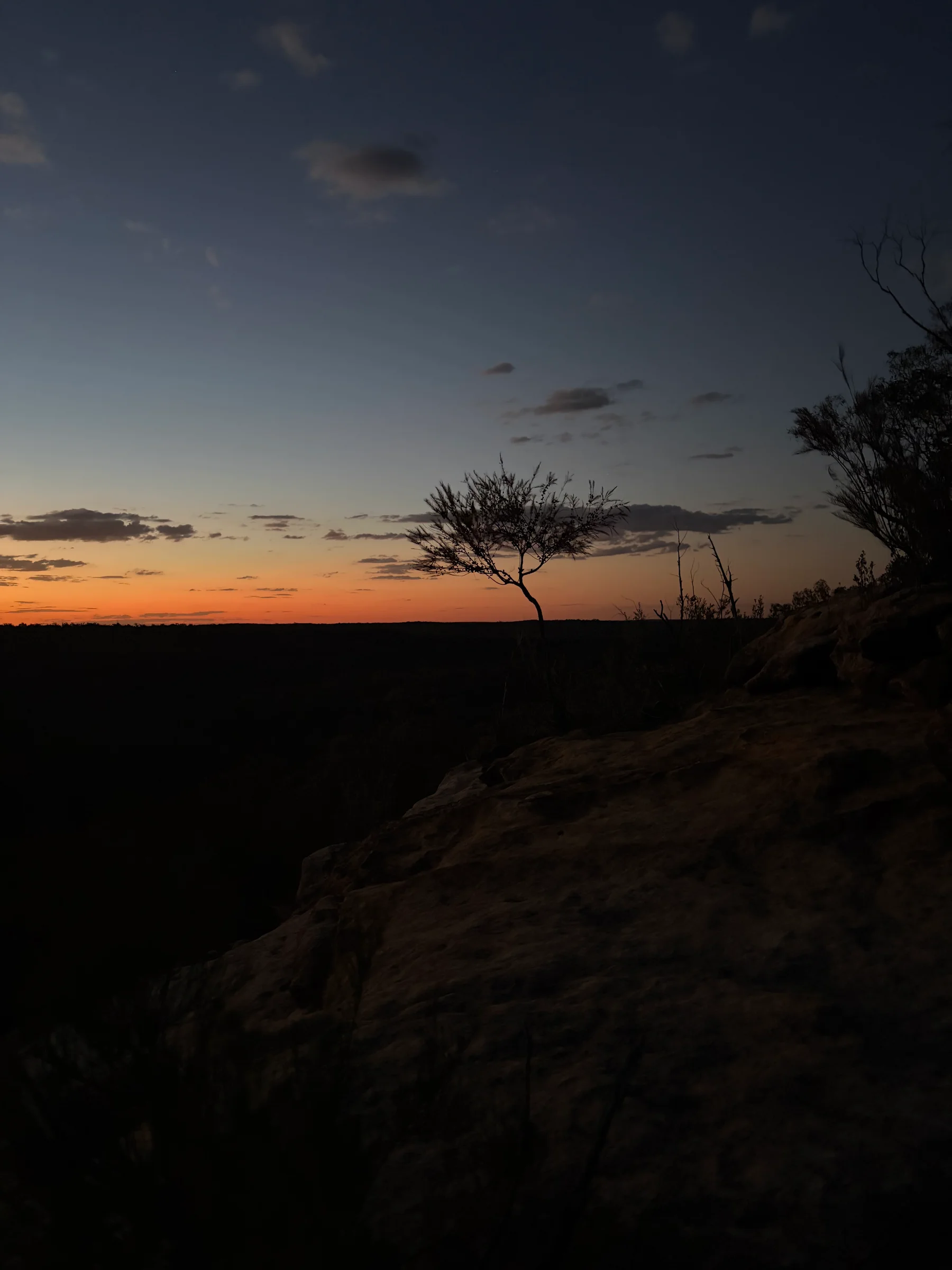
The way back was another adventure. Hiking in the dark is always slower, and everyone was happy to see the car. Then we still had to drive back through the forest and along the track. With both beam lights on, it was manageable.
Back at camp we lit a fire and cooked vegetables over it. The leftover pulled pork went on the induction cooktop, which we have been using surprisingly often. The 800 watt EcoFlow alternator charger makes a big difference, because the battery charges fast while driving. Solar is still there as backup, but at the moment it does not feel like the main plan anymore. You never know, though, so the panels stay with us.
The night was pleasant. There were a few insects in and around the car, but nothing that bites. After the coast, that was a massive relief.
The stars were again spectacular.
On Wednesday morning we had porridge and coffee, packed up camp and said goodbye to Becky and Craig.
It was a bittersweet moment. We had only just started the trip, but it was strange to think we would not see them for a long time. We will definitely miss them.
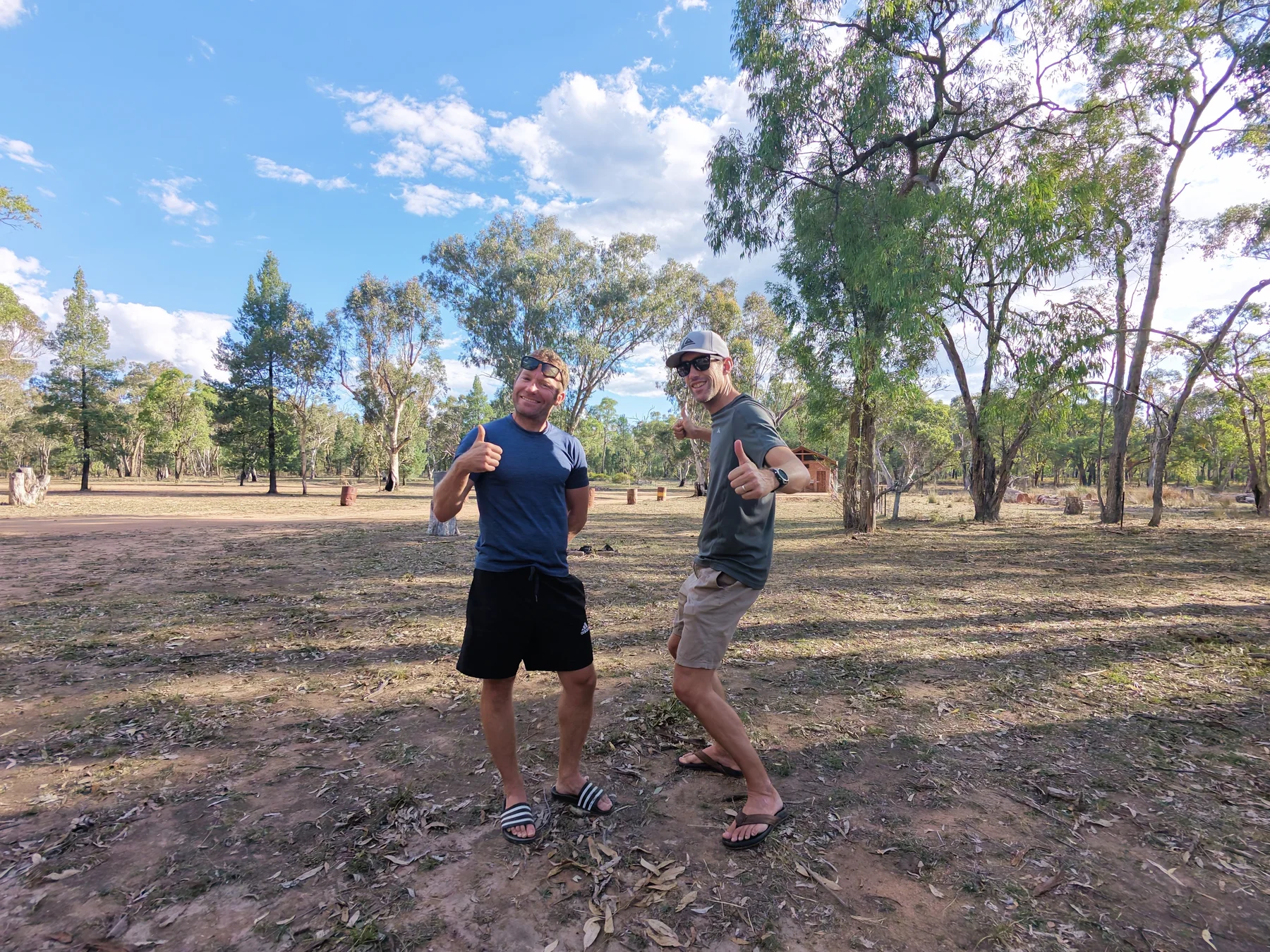
After they left, Steph and I continued north by ourselves. In some ways it felt like the real start of the journey. The moving phase was done, the shake-down phase had worked, and the first stretch with friends was behind us. From here, the rhythm would have to be ours.